


THE LEARNING LANDSCAPE TRACKS THE ED-POLICY SHIFTS AND STRATEGIES TRANSFORMING EDUCATION THROUGH A MONTHLY ROUNDUP.
Tailored for a diverse coalition of stakeholders dedicated to co-creating the future of education, each edition highlights key policy discussions and innovative developments in high schools and higher education, showcasing the momentum and transformative movements shaping the field. By featuring insights from a wide range of perspectives, this series aims to foster a deeper understanding of the challenges and opportunities within the education sector.
February 2026
Good Reads

Rising Demand for Career Education Prompts College Board to Expand Its Footprint
The nonprofit organization, which runs major programs aimed at students who plan to attend college, announced a partnership with the Carnegie Foundation for the Advancement of Teaching in December to expand the teacher pipeline for career-connected coursework. Read more on Education Week

Education’s Civic Dividend
The social returns of investments in education too often go unmeasured and undervalued. Read more on Stanford Social Innovation Review
High School Transformation
Liftoff Design Sprint: Rethinking the Launch Years
Liftoff Design Sprint
Postsecondary Innovation
The Exclusionary Rhetoric of Colleges
Stanford Social Innovation Review
UC Merced Injects Over $1 Billion in Economic Vitality into San Joaquin Valley, State
UC Merced Newsroom
Carnegie Recognizes Colleges for Community Engagement
Inside Higher Ed
State and Local News
January 2026
Good Reads

Inside The $14.5 Million Federal Push To Create New College Accreditors
A $14.5 million federal investment by the U.S. Department of Education, delivered through the Fund for the Improvement of Postsecondary Education, signals a major policy shift toward outcomes-based, technology-enabled accreditation that could redefine how colleges access federal financial aid and how government holds higher education accountable for student and workforce outcomes. Forbes
Colleges serving a different kind of student matter
Higher education policy must move beyond prestige-driven rankings to recognize institutions serving nontraditional learners, pointing to the new American Council on Education–Carnegie Foundation for the Advancement of Teaching Opportunity Colleges and Universities classification as a policy-relevant framework that centers access, economic mobility, and student outcomes in how excellence is defined and rewarded. Fast Company
High School Transformation
State Education R&D Playbook
Education Reimagined
2025 Roundup: Elementary and secondary education
Philanthropy News Digest
Postsecondary Innovation
State and Local News
Redesigning the High School Experience: Jeremy Lugbill on Career Academy Network and the Power of Community Collaboration
An Educated Guest Podcast
Governors’ State of the State Addresses: Education-Related Proposals (2026 Tracker)
Education Commission of the States
December 2025
Good Reads

U.S. Secretary of Education Linda McMahon Participates in White House Roundtable on Left-Wing Ideological Capture of Universities
U.S. Secretary of Education Linda McMahon took part in a White House roundtable with higher education stakeholders to discuss proposed reforms aimed at addressing concerns about ideology, governance, and public confidence in American universities. U.S. Department of Education
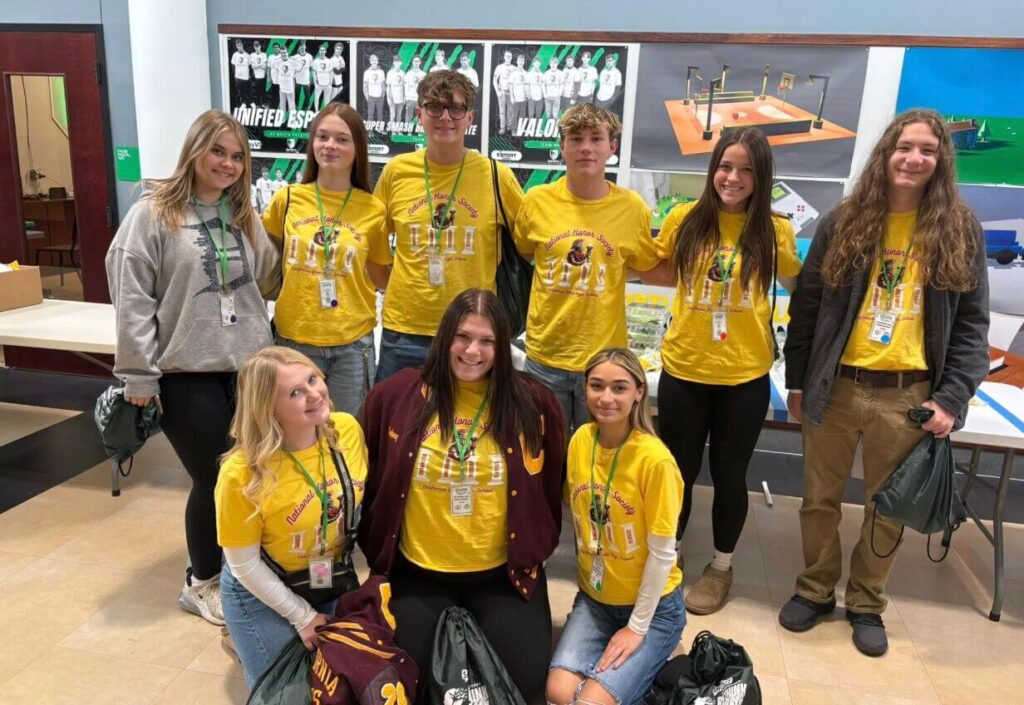
Regional Partnership in Action: A Q&A with the Grable Foundation and California Area School District
The partnership highlights how local philanthropy can catalyze policy-relevant high school reforms, from transcript redesign to skills-based recognition systems that better align assessment, and postsecondary pathways. Carnegie Stories
High School Transformation
Teachers Value ‘Patriotic’ Education More Than Most Americans
New national survey data reported by Education Week show that teachers are more supportive of patriotic education than the public, a finding with policy relevance as states and the federal government debate civics standards, curriculum limits, and funding priorities. EdWeek
U.S. Department of Education Announces Six New Agency Partnerships to Break Up Federal Bureaucracy
The U.S. Department of Education announced six new interagency agreements with Labor, Interior, Health and Human Services, and State to shift administration of selected education programs, streamline federal oversight, and advance a policy agenda focused on reducing bureaucracy and returning greater authority to states. U.S. Department of Education
STUDENT VOICE: I earned my associate degree while still in high school, and it changed my life
In a student op-ed, Maxwell Fjeld argues that his experience earning an associate degree through Minnesota’s state-funded dual-enrollment program demonstrates why federal and state policymakers should expand and standardize dual-enrollment policies. The Hechinger Report
Postsecondary Innovation
Colleges Are Closing. Who Might Be Next?
College closures, especially among tuition-dependent, for-profit, and two-year institutions, are likely to accelerate with the coming demographic cliff, and the analysis suggests federal accountability policy could be strengthened by using machine-learning models that more accurately incorporate enrollment trends and financial warning signals. Education Next
Are Young College Graduates Losing Their Edge in the Job Market?
The unemployment advantage traditionally held by young college graduates has narrowed to its lowest level since the late 1970s, driven by a long-term decline beginning around 2000 in their job-finding rates relative to high school graduates. Cleveland Fed
State and Local News
Running Toward Reinvention: How One NYC District is Rewriting the Rules of School
This article explores how a New York City school district is reimagining high school through project-based learning and teacher-built AI tools, offering a real-world example of how state policy shifts toward competency-based graduation frameworks can play out in practice. Playlab
Gov. Greg Abbott signs $8.5 billion public education funding plan into law. Here’s how it works.
Texas’ newly signed $8.5 billion public education law delivers the state’s largest recent investment in schools, boosting pay, tightening certification rules, expanding early learning and special education support, and funding campus safety while falling short of fully relieving districts’ financial pressures. The Texas Tribune
How to harness student voice for better experiences
Indiana’s Eastern Hancock Schools show how treating students as genuine partners by listening to their needs and acting on their insights can meaningfully boost engagement. District Administration
November 2025
Good Reads

Building a new American high school
A compelling deep dive into how Indiana schools are helping lead our Future of High School Network through their efforts to build new models that tie learning to real-world skills, credentials and career pathways, making education more relevant for today’s students. Indiana Capital Chronicle

4 Education-Related Takeaways From This Week’s Elections
This article offers a concise view of how the November 4 elections influenced education policy at state, local and federal levels, highlighting shifts in leadership, school board outcomes and voter-backed initiatives that could shape schools in the years ahead. Education Week
High School Transformation
States Are Reimagining Education Through Student-centered Policy
States are shifting from small pilots to systemic student-centered policies, though implementation hurdles and federal limits on assessment still constrain progress. KnowledgeWorks
Special education at a crossroads: What should the federal role be?
The downsizing of federal special-education offices has intensified debate over how IDEA oversight should function, with policymakers and advocates weighing options that range from reducing the federal role to strengthening it to ensure consistent accountability. K-12 Dive
James Madison College receives over $1M to launch civic education academy
A new federal grant is enabling James Madison College to launch the Academy for Civic Education, an interdisciplinary program built around primary texts and seminars that aims to strengthen civic learning. MSU Today
Postsecondary Innovation
Trump Wants Colleges to Freeze Tuition. Is That a Good Idea?
Trump’s proposed five-year tuition-freeze compact highlights a policy tension in higher education, as freezes can reduce sticker-price growth but also strain institutional budgets and financial-aid capacity. The Chronicle of Higher Education
College is still worth it, even with student debt, but we can do better
A new analysis shows college still delivers strong financial returns even after student loan payments, underscoring the need for policies that lower costs and boost completion so more students can fully benefit from the earnings premium a degree offers. Brookings Institution
State and Local News
You’re in and didn’t even apply? Why college direct admissions is growing nationally
Minnesota’s fast-growing direct admissions model—now being adopted statewide in California—automatically admits students based on grades, boosting enrollment and opening college doors particularly for first-gen and rural students. EdSource
Gov. Greg Abbott signs $8.5 billion public education funding plan into law. Here’s how it works.
Texas’ newly signed $8.5 billion public education law delivers the state’s largest recent investment in schools, boosting pay, tightening certification rules, expanding early learning and special education support, and funding campus safety while falling short of fully relieving districts’ financial pressures. The Texas Tribune
How to harness student voice for better experiences
Indiana’s Eastern Hancock Schools show how treating students as genuine partners by listening to their needs and acting on their insights can meaningfully boost engagement. District Administration
October 2025
Good Reads
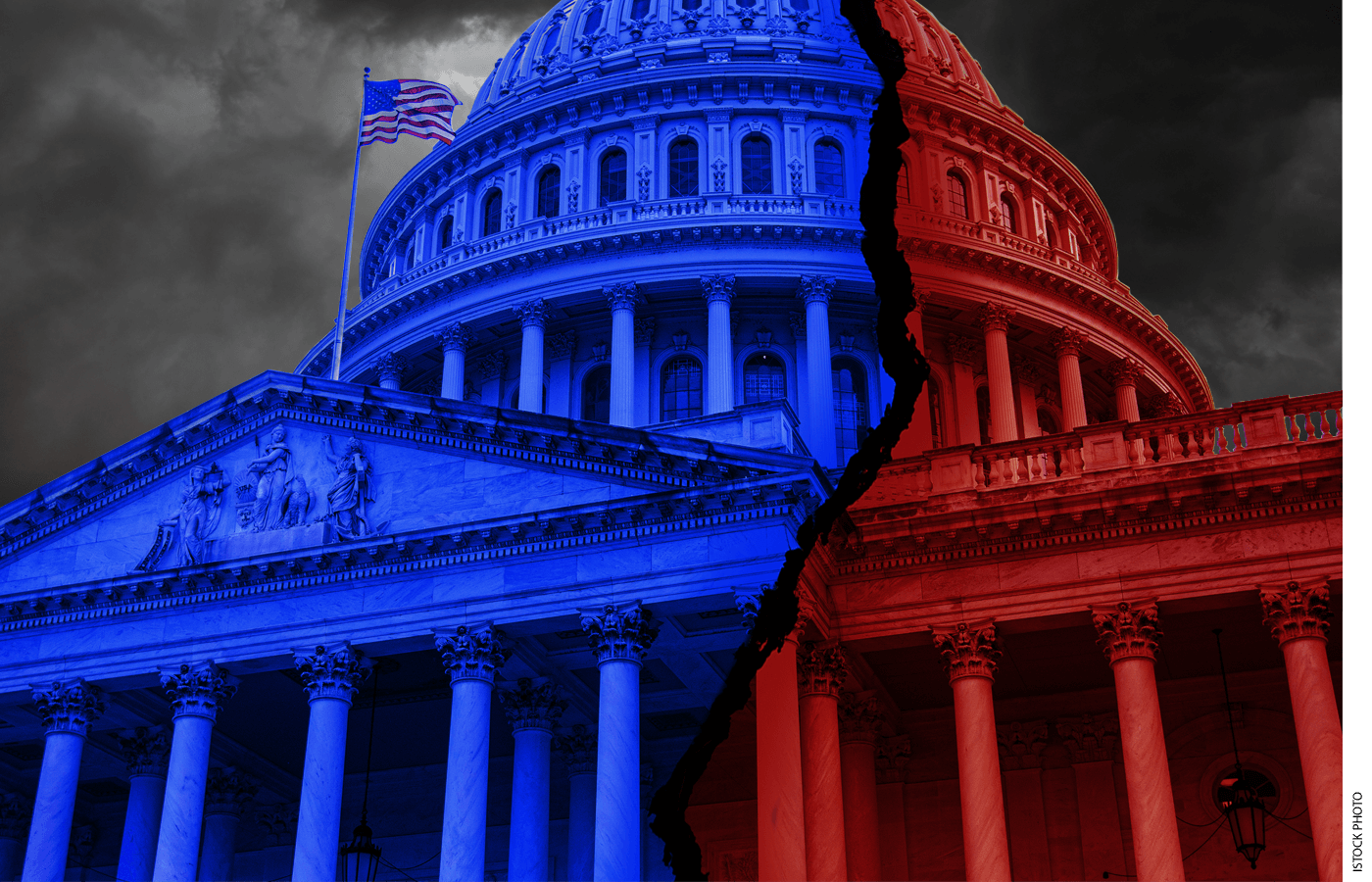
The Wrong Kind of Civic Education
Rick Hess argues that today’s political polarization is shaping how young people understand democracy, suggesting that civic learning is influenced as much by public leadership as by classroom instruction. Education Next
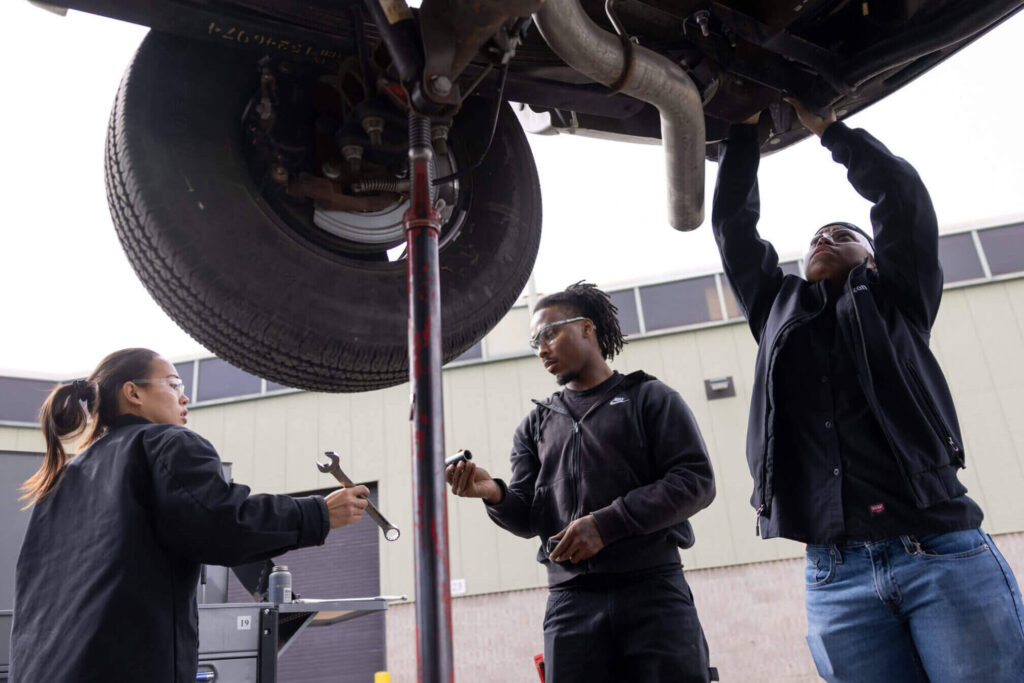
Academic Knowledge or Durable Skills? Why Not Both?
In her essay, Brooke Stafford-Brizard, Carnegie’s SVP for Innovation & Impact, underscores that these skills are not “extras” and need to be cultivated. And they emerge most powerfully when students are engaged in rigorous academic learning. Carnegie Comms
High School Transformation
Learning Rooted in Curiosity, Relevance and Authentic Connection
In her recap of Beyond the Transcript, Jeannine Collins highlights how learning rooted in curiosity, relevance, and connection helps young people build purpose, agency, and confidence. Center for the Future of Learning
Better Together
Better Together shows how Kentucky’s state policy enabled Allen County to co-create new systems of assessment and accountability with its community—transforming a traditionally top-down compliance model into an inclusive, participatory process. University of Kentucky and CIE
Seeds of Possibility: Connecting Policy to Practice Across Learning Ecosystems
Explores how communities across the country are turning policy into practice to grow vibrant learning ecosystems—showing that innovation flourishes when policy is co-created with communities. Education Reimagined
Postsecondary Innovation
New Report: Vast Majority of Recent Public College Graduates See Return on College Investment Within 10 Years
A rich and revealing report from Strada Education Foundation reframes how we think about higher education success. The State Opportunity Index asks not just “Did students finish college?” but “Did it pay off?” Strada Education Foundation
You’re in and didn’t even apply? Why college direct admissions is growing nationally
California is expanding a direct-admissions program that automatically accepts eligible high school seniors to CSU campuses—making college access simpler and more inclusive. EdSource
State and Local News
Building a new American high school
Five Indiana schools are leading a national effort to reinvent high school—linking learning to real-world careers, apprenticeships, and college credit showing how state, industry, and community partnerships can make education more relevant and future-ready. Indiana Capital Chronicle
Analysis: Idaho higher ed has more students — but fewer state dollars to support them
Idaho’s universities are seeing record enrollment, but recent state budget cuts and tax policies have left them struggling to support that growth, underscoring a gap between rising demand and declining public investment in higher education. Idaho News
Concord among districts aiming to redesign high school
Concord Community Schools’ work to redesign high school through Carnegie’s Future of High School Network shows state policy in action, turning Indiana’s diploma redesign into real, classroom-level innovation focused on mastery and relevance. The Elkhart Truth
September 2025
Good Reads

Another AI Side Effect: Erosion of Student-Teacher Trust
Generative AI is reshaping student–teacher relationships by challenging traditional trust dynamics, with researchers and educators, including Carnegie Foundation’s Brooke Stafford-Brizard, stressing the importance of transparency and building a culture of trust as AI use expands. The 74

The Science of Experiential Civics
Pamela Cantor, Fernande Raine, and Susan Rivers argue that civics education should shift from rote memorization to experiential, community-connected learning that nurtures adolescent development, relationships, and agency, enabling young people to see themselves as active participants in democracy. NASBE State Education Standard
High School Transformation
Secretary McMahon Statement on New Nation’s Report Card Scores for Grades 8 and 12
U.S. Secretary of Education Linda McMahon responded to the 2024 NAEP results by highlighting historic declines in student performance, criticizing federal spending inefficiency, and reaffirming the Trump administration’s commitment to shifting education control to the states to address learning gaps. U.S. Department of Education
Young People Know What They Need: A Call to Recenter Students in Education Reform
Janice K. Jackson, senior fellow at the Carnegie Foundation, argues that lasting education reform depends on authentically empowering students as co-creators—giving them real influence in decision-making and building leadership skills. Aspen Institute
Addressing the Readiness Gap: Preparing Students for Today’s Workforce
The U.S. Chamber of Commerce and College Board have partnered to launch new AP courses in business, and personal finance to better align high school education with workforce needs, highlighting an education policy shift toward embedding career readiness and real-world skills into graduation pathways. U.S. Chamber of Commerce
Postsecondary Innovation
Can Higher Education Lead in Workforce Transformation?
Education policy should support stackable learning pathways, employer partnerships, and trusted credentials to drive workforce transformation, argue James DeVaney and Suzanne Dove. Inside Higher Ed
Why ‘higher ed’ will thrive as it gets disrupted
Michael B. Horn explains that while many traditional colleges may struggle, higher education is poised to thrive through the emergence of new, accredited, disruptive institutions—enabled by policy shifts and new accreditors—that provide more affordable, accessible, and outcome-focused models. eCampusNews
GOP-led House panel proposes 15% cut to Education Department
House Republicans proposed a 15% reduction to the U.S. Department of Education’s 2026 budget while keeping the maximum Pell Grant intact, a plan that contrasts with the Senate’s proposal to largely maintain existing funding levels. Higher Ed Dive
State and Local News
Aldine ISD’s comeback: How the school district became one of the most improved in Texas
Cañon City Schools unveiled an AI integration strategy for the 2025–26 school year that includes a belief and guidance framework focused on safety and ethics. Houston Chronicle
New Springfield partners help students earn free college credits
Aldine ISD, under Superintendent LaTonya Goffney, improved its TEA rating by 10 to 12 points from 2023 to 2025, cutting D and F campuses from 40 to 18 through stronger instruction, added supports, partnerships, and school consolidations. WWLP 22 News
Inside the schools trying to break America’s college obsession
Rural schools like Upton High in Wyoming and Northern Cass in North Dakota are moving beyond a college-first mindset by adopting personalized learning that supports multiple career paths, a shift tied to policy discussions on expanding state and federal support for alternatives to four-year degrees. Business Insider
August 2025
Good Reads

How Postsecondary Opportunities are Changing for the Better
In a Chicago Tribune op-ed, Jeb Bush argues that states are leading promising reforms to make higher education more accessible by tying funding and program support to measurable student outcomes such as completion rates, post-graduation employment, and economic mobility. Chicago Tribune

The Race to Redefine the High School Learning Experience Is On
The Future of High School Network, launched by Carnegie Foundation and XQ, is uniting districts nationwide to replace time-based credits with competency-based learning, as seen in Aldine ISD and NEAAAT’s career pathways that emphasize real-world skills and workforce readiness over test scores. The 74
High School Transformation
How one state revamped high school to reflect reality: Not everyone goes to college
Kavitha Cardoza explains how Indiana revamped its high school diploma system by introducing optional “seals” for college, workforce, or military pathways—integrating academic rigor with work-based learning and credentials to better accommodate students’ diverse futures. The Hechinger Report
Research Notes: High-Impact Tutoring Boosts Attendance
Tara Moon highlights Stanford research showing that high-impact tutoring—intensive, in-school, small-group sessions—significantly improves student attendance, reducing daily absences by about 7%. Future Ed
Postsecondary Innovation
Degrees of Opportunity: Rethinking Value in Higher Ed
Lumina Foundation’s Jamie Merisotis reflects on the growing skepticism about college, urging higher education institutions to shift from counting degrees to demonstrating real impact in people’s lives. Forbes
Survey: Most Parents Still Want Their Kids to Go to College
A Gallup-Lumina survey of parents of children under 18 found that about 75% still want their children to continue their education beyond high school — with 40% favoring a traditional four‑year college. Inside Higher Education
Institutions Across U.S. React to Being Named Opportunity Colleges and Universities Under the New Student Access and Earnings Classification
A roundup of reactions from institutions recognized as Opportunity Colleges and Universities, expressing pride and emphasizing their commitment to access, student success, and economic mobility. American Council on Education
State and Local News
Cañon City Schools Unveils AI Integration Strategy for 2025-26 School Year
Cañon City Schools unveiled an AI integration strategy for the 2025–26 school year that includes a belief and guidance framework focused on safety and ethics. Citizen Portal
Golden Returns: A Regional Look at the ROI of California’s Community and Career Colleges
An data analysis from 327 institutions across 12 economic region finds that while some community colleges enable students to recoup their educational costs within six months, many others—particularly private nonprofits and for-profits—yield little to no return, revealing substantial disparities. College Futures
Rural communities unite to build career pathways for students
Aaron Black describes how rural districts in RAZ 32 are using multi-sector collaboratives with schools, colleges, and employers to build career pathways that align student interests with local workforce needs. Smart Brief
July 2025
Good Reads
Education Department says it will release billions in remaining withheld grant money for schools
The Trump administration is releasing over $6 billion in previously frozen federal education grants, restoring funding for programs that support English language learners, adult literacy, teacher development, and after-school enrichment. AP NEWS

What the ‘One Big Beautiful Bill’ will change for students, schools and colleges
The “One Big Beautiful Bill,” signed into law on July 4, 2025, overhauls U.S. education policy by introducing a national school voucher program, restructuring federal student loans and Pell Grant access, and imposing new accountability and tax measures on colleges. NPR
High School Transformation
Competency-based Transcripts: Key State Policy Considerations
A resource outlining key policy considerations for states exploring competency-based transcripts, emphasizing the need to align graduation requirements and transcript formats with mastery-based learning approaches that better reflect both academic and non-academic achievements. KnowledgeWorks
Let’s Get Ready! A Roadmap For Governors
Governors and education leaders called for reimagining high schools to move beyond outdated credit‑hour diplomas toward competency‑based models that integrate academic foundations, career and civic readiness, and life‑skills. NGA
More Than Half the States Have Issued AI Guidance for Schools
28 states and the District of Columbia have issued K-12 AI guidance, defining artificial intelligence, outlining ethical and privacy-conscious best practices, and emphasizing human oversight, as states step in to fill a federal regulatory gap and address the growing use of AI in classrooms. The 74
Prioritizing conformity over creativity is holding back our best teachers
Eastern Hancock Superintendent George Philhower argues that by prioritizing rigid pacing over teacher autonomy and creative instruction, current education systems hinder top talent from reaching their full potential and undermining meaningful learning. Smart Brief
Postsecondary Innovation
Trump is seeking to reshape higher education. Meet the man he wants leading the charge.
President Trump has nominated Nicholas Kent, who has extensive experience in the for-profit college sector, to serve as under secretary of education, Linda McMahon, as part of the administration’s broader efforts to reshape higher education by examining elite institutions and promoting trade schools. USA Today
Is the 3-Year Degree Dream Becoming a Reality?
Colleges, accreditors, and states across the U.S. are increasingly supporting three-year bachelor’s degree programs by reducing credit requirements, aiming to offer students faster and more affordable pathways to graduation.Inside Higher Ed
State and Local News
Alpha School, AI-Driven Education Founded in Austin, Is Coming to More Cities
Alpha School, a fast-expanding private network founded in Austin, uses artificial intelligence as the core of its two-hour-per-day academic model, promoting personalized learning and project-based skills buyilding. However, critics warn it limits socialization and lacks proof of effectiveness, especially as it seeks a foothold in public education. New York Times
Tennessee launches direct admissions pilot with student aid component
Tennessee has launched a pilot direct admissions program that will automatically admit high school students to participating colleges and pair those offers with personalized financial aid information, aiming to simplify the college enrollment process. Higher Ed Dive
Economic Mobility in California: Learnings from High-Performing Institutions
A comprehensive report identifying how four high-performing institutions advance economic mobility for low‑income students by building a culture centered on student success. Public Agenda
Operation Education: High school education in St. Joseph County is changing
School choice policies and competition in South Bend, Indiana, are reshaping local enrollment patterns and prompting questions about how districts will adapt. WSBT News
June 2025
Good Reads
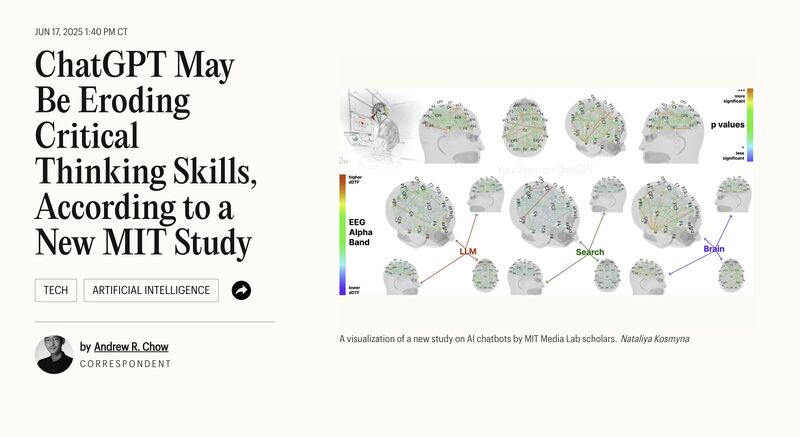
ChatGPT May Be Eroding Critical Thinking Skills, According to a New MIT Study
ChatGPT may boost efficiency, but a recent MIT Media Lab study shows it comes at the cost of deep thinking, memory integration, and student engagement. TIME
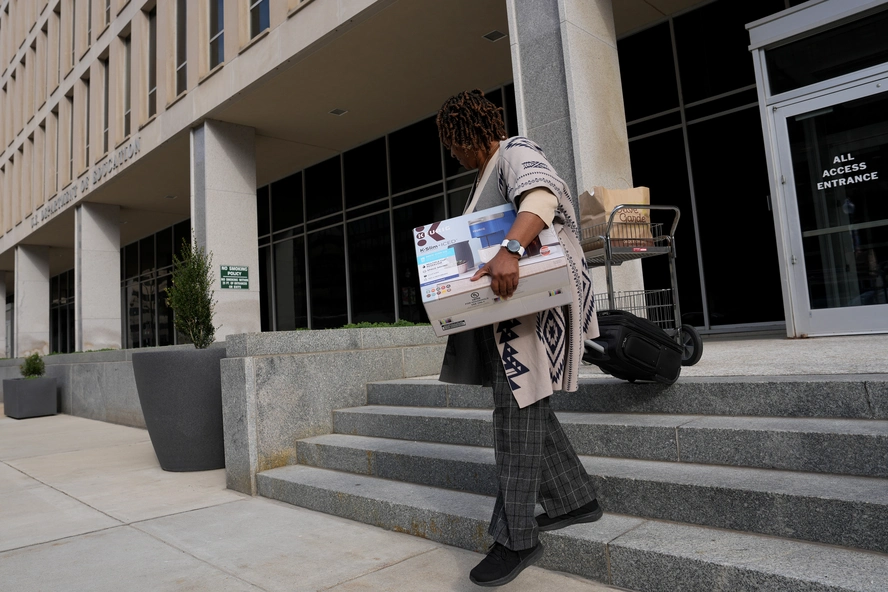
Education Department struck deal with Labor Department to offload career programs
The Education Department’s plans to outsource key functions to the Labor and Treasury Departments have been paused following a court ruling against mass staff layoffs. Politico
High School Transformation
Diploma pathways overtake high school exit exams. Are students the winners?
Aurora Institute and KnowledgeWorks launched a national map highlighting how every U.S. state is implementing competency-based education to support real-world. The 74
Most Gen Z High Schoolers Feel Unprepared for Life After Graduation
A recent study from Gallup, the Walton Family Foundation, and Jobs for the Future finds Gen Z teens feel unprepared for postsecondary life, with limited school and family support. JFF
Postsecondary Innovation
Pell Grant cuts threaten state college access goals
Proposed federal cuts to Pell Grants and other aid programs could significantly reduce college affordability for low-income students, forcing states to cover higher costs or risk declining enrollment. Brookings Institution
Some College, No Credential Student Outcomes
A new report reveals a growing population of over 43 million U.S. adults who have some college experience but no credential, with only a small fraction re-enrolling or completing a credential each year. National Student Clearinghouse Research Center
Illinois lawmakers pass bill to establish direct admissions program
Illinois joins a growing number of states adopting direct admissions programs aimed at reducing college access barriers and simplifying the application process for students. Higher Ed Dive
State and Local News
California awards over $15 million to apprenticeship programs connecting youth to high-paying jobs
Governor Newsom awarded $15.4 million in California Opportunity Youth Apprenticeship grants to support 29 programs offering paid pre-apprenticeships that connect 16–24-year-olds with high-demand, high-wage jobs. Office of Governor Gavin Newsom
Nevada Legislature Approves State’s First Open Enrollment System
A bipartisan education reform bill establishes open enrollment statewide, allowing students to transfer outside their assigned zones and receive transportation support if leaving low-performing schools. The 74
Indiana unveils first draft of overhauled school accountability system to replace A-F grades
Indiana is replacing its A–F school grading system with a new model that uses a point-based approach to measure student growth, career readiness, and life skills—giving a fuller picture of school performance beyond test scores. Indiana Capital Chronicle
Oregon education accountability bill passes Senate. What’s next?
The new K–12 bill ties Oregon’s record school funding to measurable student outcomes by requiring local goal-setting and accountability measures, with state intervention reserved for underperforming districts. Oregon Public Broadcasting
Governor Reeves Announces Launch of Mississippi AI Talent Accelerator Program, $9.1 Million in Grants
MAI‑TAP, a partnership among AccelerateMS, the Mississippi Development Authority, AWS, and the newly formed AI Workforce Readiness Council, aims to develop AI curricula, infrastructure, and research in state colleges and universities. Mississippi State University
Gov. Greg Abbott signs $8.5 billion public education funding plan into law. Here’s how it works.
Gov. Greg Abbott signed House Bill 2, directing an $8.5 billion funding infusion into Texas public schools for teacher raises, special education, campus safety, early learning, and operational costs. Texas Tribune
May 2025
Good Reads

Is It Time to Ditch the Four-Year Degree?
In a conversation between Timothy Knowles (Carnegie Foundation) and Frederick Hess (American Enterprise Institute) for Education Week, Tim shares several actions that would make postsecondary education work for more young people. Carnegie Foundation via EdWeek
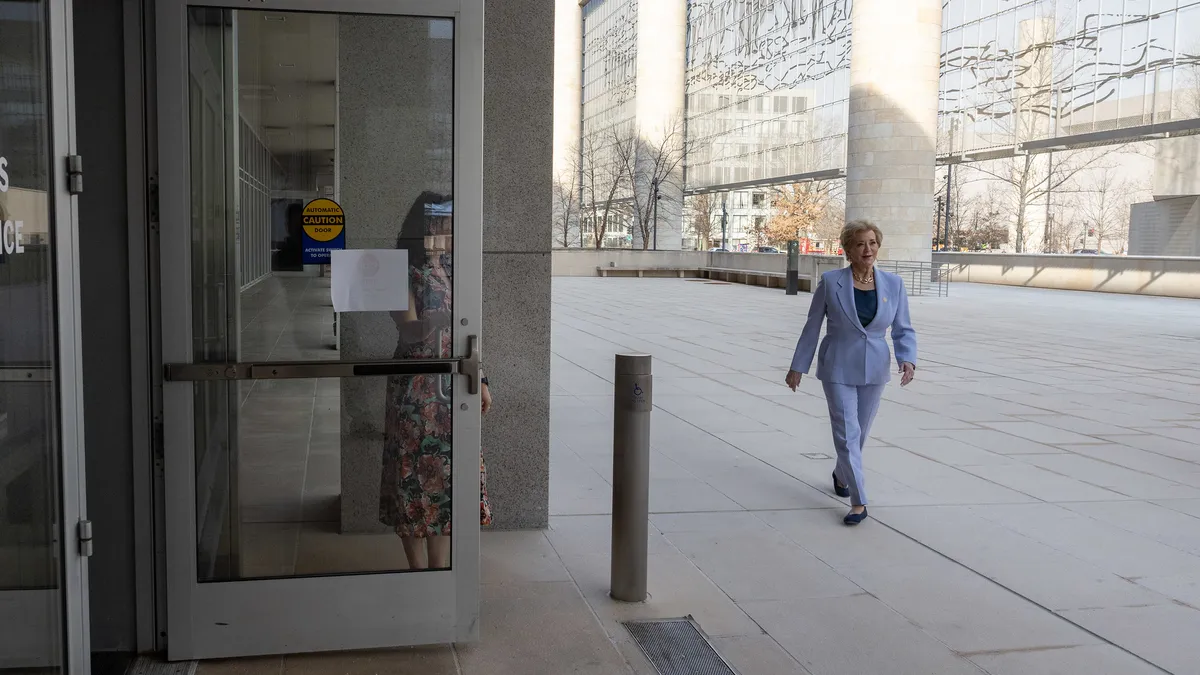
McMahon defends $12B proposed cut to the Education Department
Education Secretary Linda McMahon defended a proposed $12 billion reduction to the department’s budget, framing it as a realignment of priorities toward workforce development and national defense. Higher Ed Dive
High School Transformation
Diploma pathways overtake high school exit exams. Are students the winners?
More states are replacing high school exit exams with flexible graduation pathways, a shift boosting diploma rates but sparking debate over academic standards. Chalkbeat
Congress usually snubs private school choice expansion. Trump’s ‘big, beautiful bill’ embraces it.
A GOP-backed bill would create a $5 billion federal tax-credit scholarship program, expanding private school choice nationwide—including in states without current programs—as it heads to the Senate. Chalkbeat
Education Department Adds $60 Million in Grants for Charter Schools
The U.S. Department of Education is investing $60 million to expand charter schools through grants to states and nonprofits, amid persistent concerns over transparency and public oversight. Education Week
Trump Sends Mixed Signals on Apprenticeship and Job Training
Trump’s new apprenticeship executive order promotes apprenticeship expansion, but proposed budget cuts and lack of new investments could undermine progress towards that goal. Inside Higher Ed
Postsecondary Innovation
Most Pell Grant recipients to get less money under Trump budget bill, CBO finds
House Republican budget proposal would reduce or eliminate Pell Grants for many low-income students by requiring heavier course loads, with over half projected to receive less aid and up to 10% losing eligibility. The Washington Post
Linking Postsecondary and Workforce Outcomes Data Nationally
States are building cross-agency data systems to track postsecondary and employment outcomes, aiming to guide student choices and strengthen talent pipelines. Education Commission of the States
Upward transfers: 2 states now look to boost bachelor’s degree completion
Community colleges in Illinois and Connecticut are piloting targeted supports to ease student transitions into four-year programs and increase bachelor’s degree attainment. University Business
State and Local News
Texas Legislature approves $8.5 billion boost for public schools after years of stagnant funding
Texas lawmakers passed an $8.5 billion school funding bill aimed at raising teacher pay and addressing inflation-driven budget shortfalls. The Texas Tribune
New York’s adult learners can now attend community college for free
New York has launched a new program making community college free for adult learners who enroll full time, regardless of income. Higher Ed Dive
Veteran educator Molly L. Hart will be Utah’s next state school superintendent of public instruction
Following a unanimous board vote, Molly L. Hart, a longtime Utah educator, has been appointed the state’s next superintendent of public instruction. Desert News
Denver Public Schools gets the OK to award associate degrees
Denver is now the first large district in the U.S. granted authority to confer associate degrees to high school students in select programs. K–12 Dive
Illinois considers lowering scores students need to be proficient
Illinois may lower the number of correct answers needed for students to be deemed proficient on state math and reading tests, prompting debate over rigor and fairness. The 74
Alabama Gov. Kay Ivey increases state budgets, signs landmark school funding reform package
Alabama passed a historic education budget that increases teacher pay and allocates new funds to high-needs districts and facilities. Advance Local Alabama
Georgia Gov. Kemp signs workforce development legislation
Georgia enacted several new laws focused on workforce readiness, expanding dual enrollment, apprenticeships, and training grants. Governor Brian P. Kemp Office of the Governor
April 2025
Good Reads

Opportunity Colleges: Measuring What Truly Matters
A new framework to the Carnegie Classifications, designed by the Carnegie Foundation and the American Council on Education, aims to assess colleges based on student access and social mobility, challenging traditional rankings. Forbes

How Universities Became So Dependent on the Federal Government
Decades of expanding federal support have made universities increasingly reliant on government funds, drawing new attention amid proposed budget cuts. The New York Times
High School Transformation
A smaller NAEP
Budget constraints lead to the scaling back of the Nation’s Report Card assessments, raising questions about future educational benchmarking. The Hechinger Report
The Apprenticeship Renaissance: How Governors Are Reimagining Workforce Development
Governors across the country are expanding apprenticeship programs to address workforce needs and provide alternative pathways to careers. New America
Another Judge Rules Against Private School Choice. Here’s Why
A state court struck down a school choice law on constitutional grounds, adding to ongoing legal debates around public funding of private education. EdWeek
Postsecondary Innovation
House Bill Calls for Risk-Sharing, Sweeping Changes to Student Loan Program
Proposed legislation aims to cut $330 billion in federal spending by eliminating subsidized undergraduate loans, capping federal student loan amounts, and requiring colleges to repay a portion of defaulted loans. Inside Higher Ed
Undergraduate Degree Earners
A new report shows a rise in certificate completions and a decline in associate and bachelor’s degrees, highlighting shifting trends in higher education. National Student Clearinghouse Research Center
State and Local News
A National ‘Blueprint’?: Indiana Shifts Millions in Taxes To Charters From Districts
Indiana reallocates property tax funds from traditional public schools to charter schools, sparking debate over funding equity. The 74
Chicago Public Schools CEO Pedro Martinez picked to lead Massachusetts schools
Recently concluding his tenure at CPS, Pedro Martinez is set to become Massachusetts’ next commissioner of elementary and secondary education. Chalkbeat Chicago
North Dakota’s GOP governor vetoes library restrictions, school voucher program
Governor Kelly Armstrong vetoes bills on library content restrictions and a proposed school voucher program, citing concerns over implementation and overreach. AP News
California launches first phase of long-anticipated Cradle-to-Career data system
California debuts an integrated data system that links data from schools, colleges, workforce, and social services into one public platform that helps users explore student outcomes, earnings, and education pathways. EdSource
House committee approves $10 billion education budget; floor vote expected Thursday
Alabama’s proposed education budget boosts funding for school choice, student-need-based allocations, teacher health insurance, and literacy and STEM programs, while omitting a teacher pay raise. Alabama Reflector
Texas Is Poised to Create a $1 Billion Private School Voucher Program
The Texas House approved a $1 billion education savings account plan that would provide public funds for private school tuition, homeschooling, and virtual learning. The New York Times
March 2025
Good Reads
What the data says about the U.S. Department of Education
Pew breaks down what the Education Department actually does—and how Americans view its impact—as debates rage over its existence. Pew Research Center
Student Well-Being, School Choice, Higher Ed Top Governorsʼ Priorities for 2025
Governors are outlining big education priorities for 2025, with a focus on funding, choice, and postsecondary pathways. The 74
High School Transformation
Scholar Douglas Harris Debuts New ‘Wikipediaʼ of K-12 Research
A new open-access database aims to make K-12 research more accessible and usable for policymakers and educators. The 74
The South Surges Academically in Alternative View of National Exam
A new analysis of NAEP data flips the usual narrative—showing the South making some of the nation’s biggest academic gains. The 74
The College Board Adds Two New AP Courses. Here’s What Makes Them Different
The College Board is launching career-focused AP courses in cybersecurity and business/personal finance to equip students with real-world skills and accelerate career development. EdWeek
Postsecondary Innovation
What types of colleges offer the best ROI?
A Georgetown study reveals that institutions like MIT and specialized healthcare schools top the list for return on investment, offering graduates substantial long-term financial benefits. Higher Ed Dive
A Bipartisan Blueprint For Enhancing Higher Education’s Value
With higher ed under pressure, a bipartisan coalition is pushing new ideas to measure value, cut costs, and prove public worth. Forbes
Survey: Understanding Incoming College Student Demographics
A new national survey captures sharp shifts in who’s entering college and reveals deep divides in students’ sense of belonging, purpose, and preparedness. Inside Higher Ed
More state colleges are using direct admissions to boost enrollment
State colleges are turning to direct admissions to remove barriers and bring more local students through their doors. The Washington Post
College Application Surge: Underrepresented Students Lead Growth in 2024–25 Admissions Cycle
Applications are surging, and students from historically excluded groups are fueling the rise in this year’s admissions cycle. Diverse: Issues in Higher Education
State and Local News
What is Arkansas ACCESS?
Arkansas just passed a sweeping law that reshapes how the state funds colleges, awards scholarships, transfers credits, and handles admissions. Arkansas Advocate
Florida education bill would remove requirement to pass Algebra I, English exams to earn high school diploma
A bill moving through the Florida legislature would drop select testing requirements for graduation, sparking debate about what students should need to earn a diploma. WPTV
Oklahoma leaders ask Trump administration to cut federal strings on education funds
Oklahoma officials support Trump’s plan to dismantle the Education Department and want more freedom over how federal education money is used. Oklahoma Voice
Kentucky lawmakers’ education changes are now on Beshear’s desk
Kentucky lawmakers approved a broad set of education bills, including an act promoting school innovation, now waiting on the governor to decide what becomes law. Kentucky Lantern
Gov. Cox returns ‘homeʼ to sign bill boosting support for Utahʼs rural schools
Utah is adding new supplemental funding for rural schools to help them hire staff, expand services, and close resource gaps. Yahoo! News
Gov. Whitmer Invests $1.9 Million in Programs that Support 287 Michiganders with Career Training Opportunities
Michigan is channeling $1.9 million into apprenticeship programs to help residents gain skills for high-demand, well-paying jobs. Michigan Department of Labor & Economic Opportunity
February 2025
Good Reads
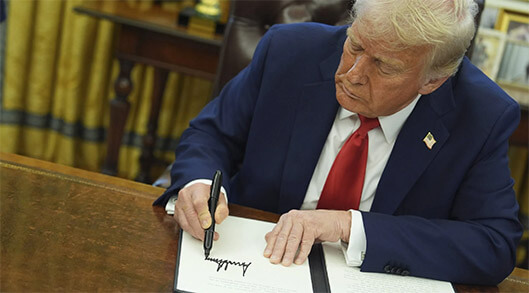
Tracking Trump: His actions on education
Learn how President Trump’s efforts to dismantle the Education Department, redefine school policies, and cut funding are unfolding. Hechinger Report
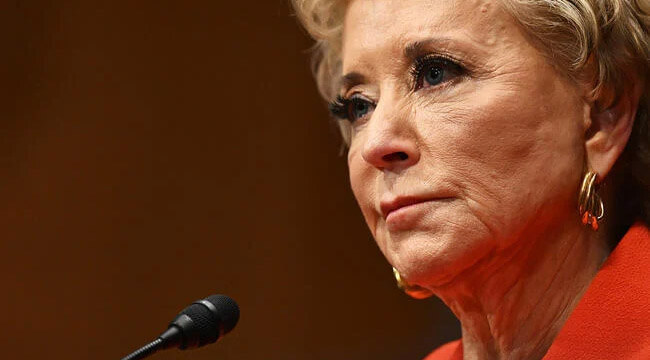
5 Key Takeaways From McMahon’s Hearing for Ed Secretary.
Linda McMahon, during her confirmation hearing for Education Secretary, affirmed President Trump’s intent to dismantle the Department of Education, aligning with his long-standing goal to reduce federal involvement in local education matters. Inside Higher Ed
High School Transformation
We’re not prepared’: States brace for Trump’s plans to dismantle the Education Department
States are scrambling to prepare as President Trump moves to dismantle the Education Department, raising concerns about the future of federal education oversight. NBC News
Exclusive: 12 Education Chiefs Ask McMahon for More Control over Federal Funds
Twelve state education chiefs are pressing Linda McMahon to loosen federal oversight and give states greater control over education funds, setting the stage for a potential power struggle over policy decisions. The 74
Expanding Access to K-12 High School Work-Based Learning
Explore how state leaders are enhancing work-based learning to better prepare students for postsecondary life, addressing the gap in students’ preparedness for future careers. NASBE
Standards Gap: Why Many Students Score Proficient on State Tests But Not on NAEP.
Some states report far higher proficiency rates on their own assessments compared to NAEP, raising concerns about inconsistent educational standards. The 74
Postsecondary Innovation
Amid Federal Upheaval, a Pell Shortfall Looms
The Pell Grant program is facing a projected $2.7 billion budget shortfall for the upcoming fiscal year—the first in over a decade—potentially jeopardizing financial aid for low-income college students. Inside Higher Ed
Another push for JOBS Act
A renewed push for the JOBS Act could expand Pell Grants to short-term job training, but critics warn it may steer federal funds toward programs with questionable value. Community College Daily
Ending the Research 1 ‘Arms Race’
The Carnegie Foundation’s overhaul of R-1 classification could upend university priorities, reshaping funding, reputation, and the race for research dominance. Inside Higher Ed
The Common App welcomes community colleges
For the first time, community colleges are joining the Common App—opening doors for more students to seamlessly apply and expand their educational opportunities. Inside Higher Ed
State and Local News
Universal school vouchers clear Senate with notable addition of pre-K funding
Wyoming’s Senate approved a universal school voucher program with pre-K funding, sparking legal challenges and debates over its impact on public schools. WyoFile
Expanding Higher Education: Governor Hochul Announces 22 Community Colleges Awarded More Than $1 Million to Support Adult Learners
New York’s Governor has announced $1.1 million in grants to 22 community colleges, aiming to break down barriers for adult learners and enhance access to higher education. Office of Governor Kathy Hochul
Louisiana’s NAEP Score — A Victory for the Science of Reading?
Louisiana’s fourth-grade reading scores have risen from 50th to 16th nationally, highlighting the state’s commitment to the Science of Reading and back-to-basics literacy reforms. EdSurge News
Under Texas House bill, value of education savings accounts would be tied to public school funding
Texas House Bill 3 proposes education savings accounts tied to public school funding levels, potentially diverting funds from public education and impacting resources for public school students. The Texas Tribune
Colorado bill would make financial literacy class a graduation requirement
A new Colorado bill could make financial literacy a graduation requirement, reflecting a growing national debate over whether students are leaving high school with the real-world skills they need. Colorado Newsline
Georgia school voucher list makes more than 400,000 students eligible
Georgia’s expansive new voucher program makes over 400,000 students eligible for $6,500 scholarships, sparking debates about public education’s future. AP News
These 13 bills would change Indiana’s K-12 education system
Indiana lawmakers are considering 13 bills that could transform K-12 education, including universal school vouchers, property tax reforms affecting school funding, and changes to charter school financing. WFYI Indianapolis
Idaho Gov. Brad Little signs law that directs state funds to private school tuition
Idaho has launched its first private school choice program, channeling state funds into tuition assistance and reigniting tensions over public education funding. Idaho Capital Sun


