


National Faculty
Carnegie National Faculty (CNF) are distinguished scholars and practitioners who have distinctive expertise in particular areas of improvement science in education.
CNF are engaged in substantial work with the Foundation supporting the spread of improvement science in the field, particularly through teaching, development, and coaching. The relationship between the Foundation and its CNF is defined by a shared interest in the Carnegie mission and, therefore, is guided by a sense of how best to advance this common cause and support the Foundation in its pursuit of this aim. Carnegie National Faculty are awarded specific endorsements that signal the particular areas of their engagement within the Foundation’s field building strategies.
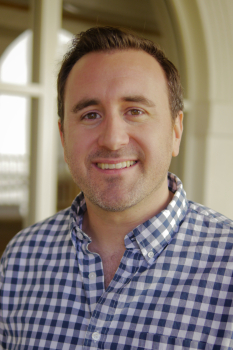
Brandon Bennett
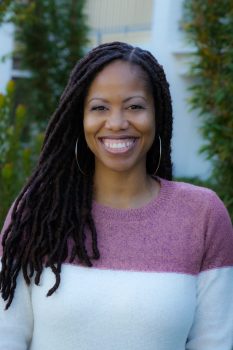
Valeria Brown
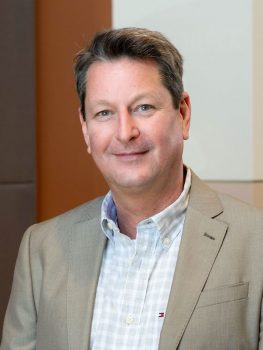
Robert Crow
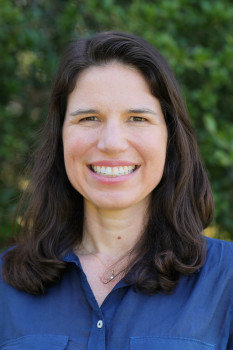
Christina J. Dixon
David Eddy-Spicer
Shelah Feldstein
Louis Gomez

Alicia Grunow
Erin Henrick
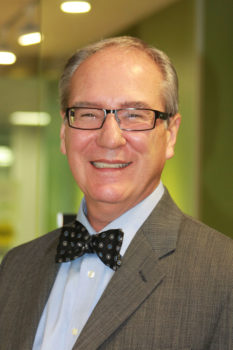
Randy Hitz
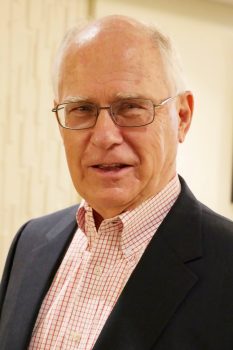
David Imig
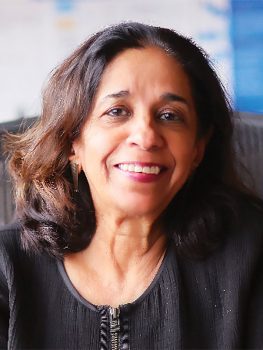
Uma Kotagal
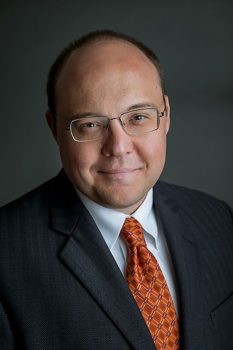
Chad R. Lochmiller

Thanh Trúc T. Nguyễn
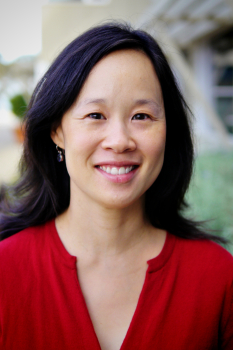
Sandra Park
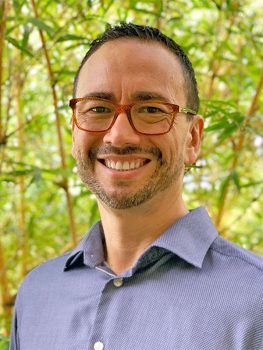
Richard C. Seder
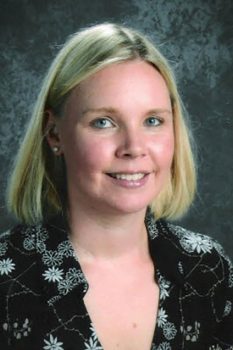
Claire Silva
Carnegie National Faculty
Brandon Bennett
Brandon Bennett, MPH, Principal Advisor for Improvement Science Consulting began his career as a United States Peace Corps volunteer, where he worked to continuously improve microfinance repayment rates for people living with HIV and struggling in poverty. He has served as an improvement advisor in the fields of healthcare and education, leading and advising on diverse initiatives from disease specific processes to country wide improvement programs. Brandon has published on the application of improvement science methods and has been a featured speaker at quality conferences around the world. He is currently a senior fellow at the Carnegie Foundation for the Advancement of Teaching, faculty for the Improvement Advisor Professional Development Program offered through the Institute for Healthcare Improvement, faculty for the Improvement Science for Academics offered through HAELO (a UK based innovation and improvement center) and senior advisor to Ko Awatea, a New Zealand based organization that delivers health system innovation and improvement services to Australasia.
Chief Education & Strategic Partnership Officer, Levine Museum of the New South
Valeria Brown
Val Brown is the Chief Education and Strategic Partnership Officer at the Levine Museum of the New South in Charlotte, NC. With 20 years of experience spanning teaching, central office administration, higher education, and non-profit organizations, Val has specialized in high school transformation, professional learning, instructional practice, and equity. She co-authored a framework for antiracist education and is dedicated to enhancing community-connected learning experiences and promoting teacher leadership. Most recently, Val served as the Director for the Future of Learning at the Carnegie Foundation for the Advancement of Teaching.
In 2013, Val was named Seminole County, FL Teacher of the Year and received recognition from the White House Initiative on Educational Excellence for African Americans in 2015. She is the founder of #ClearTheAir, an international online community of educators committed to personal and professional development through dialogue and learning. Val is also the co-host of the Integrated Schools podcast and a columnist for Learning Forward’s The Learning Professional. She actively presents at conferences across the country and earned her Ed.D. in professional learning for educators from the University of Florida. In her current appointment as a member of Carnegie’s National Faculty, she supports the Foundation’s Educator Advisory Panel as well as other key initiatives.
Carnegie National Faculty
Robert Crow
Robert Crow is an associate professor of educational research at Western Carolina University where he teaches courses in improvement science in the institution’s doctoral and masters programs in educational leadership. Dr. Crow’s research interests include improvement science and scholar practitioner development. He is the co-editor of the recent publication, The Educational Leader’s Guide to Improvement Science: Data, Design and Cases for Reflection. He co-authored the recent book, The Improvement Science Dissertation in Practice: A Guide for Faculty, Committee Members, and their Students. Dr. Crow currently co-leads the Carnegie Project on the Education Doctorate (CPED) improvement science CPED improvement group (IS-CIG).
Carnegie National Faculty
Christina J. Dixon
Christina J. Dixon is an advisor, consultant and coach partnering with education leaders to transform their organizations through continuous improvement. She currently collaborates with the Improvement Collective, WestEd, the University of Pittsburgh, Studer Education, A+ Schools and the Carnegie Foundation for the Advancement of Teaching, where she recently served as an associate for networked improvement science.
Prior to joining the Foundation, Christina provided coaching, on-site support, and professional development to leaders of education, healthcare, and non-profit organizations seeking to use systems principles to better meet the needs of the people they serve. She co-founded True North Institute, where she supported Bedford Area School District in creating a model for using Toyota Production System principles to improve student achievement, and was a principal of Value Capture, LLC, where she consulted with healthcare systems to accelerate their transformation to achieve safety, quality, and financial goals. Christina also served as executive director of Summerbridge Pittsburgh, and as national service director for Summerbridge National (now Breakthrough Collaborative). She holds a B.A. from Stanford University, an M.Ed. from Bank Street College of Education, and an Ed.D. in Education Leadership from the University of Virginia.
Carnegie National Faculty
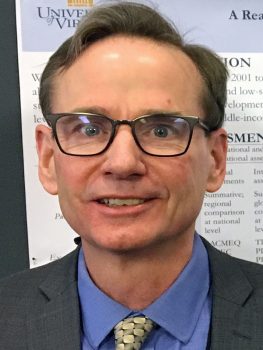
David Eddy-Spicer
David Eddy-Spicer is a professor of educational leadership in the Department of Leadership, Foundations and Social Policy at the Curry School of Education and Human Development, University of Virginia. He holds a doctorate in teaching and learning from Harvard University, where he served as research director of WIDE World, an online initiative that worked with K-12 school systems internationally to develop systemic capacity for deeper learning. He has served on the faculties of the University of Bath, UK, and the UCL Institute of Education, London.
He designs and teaches courses and workshops on improvement science and continuous improvement to aspiring and advanced educational leaders. He has designed and delivered professional learning on continuous improvement for system and school leaders in Virginia, Maryland, New York, and California, as well as in the UK and Europe.
At the University of Virginia, he leads UVA’s partnership with Chesterfield County Public Schools as part of the Carnegie Foundation’s iLEAD initiative. His primary research interests focus on the leadership of equity-oriented continuous improvement in K-12 schools and school systems, particularly organizational learning for redressing inequities in teaching and learning, developing collaborative capacity for effective problem-solving through interorganizational connections, and curricular coherence for powerful learning in leadership preparation programs.
He has expertise in program evaluation, case study research, realist evaluation, and the design and evaluation of professional learning environments. He serves on the Leadership Board of the Improvement Scholars Network and is co-editor of the SAGE Handbook of School Organization (2019) and a section editor of the forthcoming Foundational Handbook on Improvement Focused Educational Research, to be published by Rowman and Littlefield. He has published in a number of peer-reviewed journals, including Compare: A Journal of Comparative and International Education; Educational Management Administration and Leadership; Educational Review; Journal of Educational Change; Journal of Professional Capital and Community; Language and Education; Mind, Culture and Activity; and Pedagogies. He has authored or co-authored numerous book chapters and over three dozen text and multimedia case studies on the diffusion of innovation, professional learning, and organizational change in the public sector.
Carnegie National Faculty
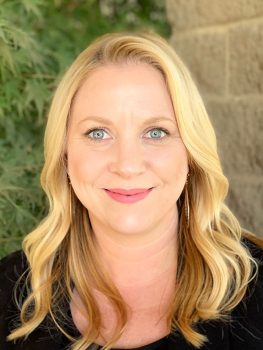
Shelah Feldstein
Shelah Feldstein serves as director for the Mid-State Collaborative, a Geographic Lead Agency housed at the Tulare County Office of Education, and is charged with building the capacity of county offices to support school districts across the state. Shelah founded and directed the Central Valley Networked Improvement Community (CVNIC), a network which was selected as a Carnegie Spotlight honoree in 2019 and continues to thrive today. Along with facilitating improvement efforts across organizations in her region, Shelah served as a lead in developing and facilitating California’s statewide continuous improvement trainings. Shelah has an ongoing role as National Faculty for the Carnegie Foundation and participates on California’s Continuous Improvement Advisory. Serving in many roles throughout her educational career, Shelah has both a secondary mathematics and life science teaching credential, has earned a masters of arts in education, and holds a clear administrative credential.
Carnegie National Faculty
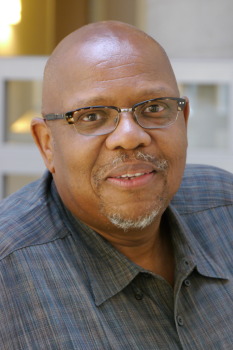
Louis Gomez
Louis Gomez is Professor of Education (and of Information Studies) at the University of California, Los Angeles. Gomez has served since 2008 as a senior fellow at the Carnegie Foundation for the Advancement of Teaching, where he leads the Network Development work. Beginning in 2009, he held the Helen S. Faison Chair in Urban Education at the University of Pittsburgh, where he was also director of the Center for Urban Education and a senior scientist at the Learning Research and Development Center. From 2001 to 2008, he held a number of faculty appointments at Northwestern University, including the Aon Chair in the Learning Sciences at the School of Education and Social Policy. Prior to joining academia, he spent 14 years working in cognitive science and person–computer systems and interactions at Bell Laboratories, Bell Communications Research Inc. and Bellcore. His research interests have encompassed the application of computing and networking technology to teaching and learning, applied cognitive science, human–computer interactions and other areas. Gomez received his bachelor’s degree in psychology from the State University of New York at Stony Brook in 1974 and a doctorate in cognitive psychology from UC Berkeley in 1979.
Carnegie National Faculty
Alicia Grunow
Alicia Grunow is an educational improvement expert, specializing in how to apply the science of improvement to help teams, organizations, and networks reach their improvement goals. Alicia started her career as a bilingual teacher in Denver Public Schools and then in New York City, working to improve outcomes for students that speak a language other than English. Through this work she discovered a passion for redesigning systems to better meet the needs of students. She pursued a specialization in improvement science and has spent the past seven years adapting these methodologies for education at the Carnegie Foundation for the Advancement of Teaching, where she coauthored the seminal book on the topic—Learning to Improve: How America’s Schools Can Get Better at Getting Better.
Alicia remains senior fellow at the Carnegie Foundation and recently co-founded the Improvement Collective, a partnership dedicated to helping organizations to build their improvement capacity in order to solve important problems in education and the broader social sector. She holds a B.A. in psychology from Reed College, an Improvement Advisor certificate from the Institute from Healthcare Improvement, and a master’s degree in economics and Ph.D. in education from Stanford University.
Carnegie National Faculty
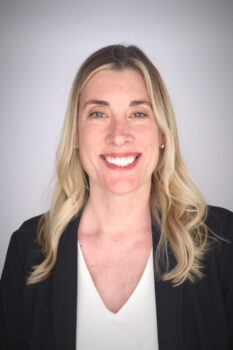
Erin Henrick
Erin Henrick is a senior lecturer in the Department of Leadership, Policy, and Organization at Peabody College of Vanderbilt University. Dr. Henrick is also president of Partner to Improve, an education research and consulting group supporting improvement and systemic change in education through powerful partnerships. Dr. Henrick is an Research Practice Partnerships (RPPs) researcher, evaluator, and professional development provider. Prior to evaluating RPPs, Dr. Henrick was a researcher on a 10-year NSF funded RPP (known as MIST) focused on improving math instruction across large urban districts. She co-authored the book Systems for Instructional Improvement-Creating Coherence from the Classroom to the District Office. Dr. Henrick received her Ed.D. in Leadership, Policy, and Organization from Vanderbilt University.
Randy Hitz
Dr. Randy Hitz is a dean emeritus of the Graduate School of Education at Portland State University. His higher education administrative experience spans three decades and also includes dean positions at the University of Hawaii and Montana State University. Before becoming a dean, he served in the Oregon Department of Education as the early childhood education specialist and helped to create Oregon’s state prekindergarten program. His teaching experience ranges from preschool and kindergarten to graduate education.
Dr. Hitz has published over 60 professional articles on topics related to educational policy and curriculum. He has served on a wide variety of state and national boards and committees, including the teacher licensing boards of Montana and Hawaii, the Board of Directors of the National Council for the Accreditation of Teacher Education (NCATE), and the Board of the American Association for Colleges of Teacher Education where he served a term as chair. He chaired the Unit Accreditation Board for NCATE and the Accreditation Council for the Council for Accreditation of Education Professionals (CAEP). He also served on the board of CAEP and currently serves on the Council for Educator Advancement formed by Oregon’s Governor, Kate Brown. Dr. Hitz has a Ph.D., master’s degree, and baccalaureate degree from Indiana State University.
President and CEO of Sample Title
David Imig
David Imig, PhD, is part of the national faculty at the Carnegie Foundation for the Advancement of Teaching and a Professor of the Practice in the College of Education at the University of Maryland. He teaches courses in teacher education policy and practice, school and teacher leadership. A founder of the Carnegie Project on Education Doctorate (CPED), a national organization of some 85 graduate schools of education, he is co-leading an effort at Maryland to transform doctoral education to focus on “expectations, outcomes and achievements” of four professional cohorts of EdD students in large metropolitan school districts in areas surrounding the campus.
Prior to coming to College Park in 2006, Imig was the president and chief executive officer for the Washington, DC-based American Association of Colleges for Teacher Education (AACTE) for twenty-five years. He was awarded emeritus status upon his retirement from AACTE. Imig has also served as chair of the NCATE executive committee, the National Policy Board for Educational Administration and the Forum for Education Organization Leaders, as well as the National Society for the Study of Education. He has conducted program reviews and served on numerous college and university advisory committees in the US and abroad. He holds a lifetime achievement award from the UK-based Universities Council for the Education of Teachers (UCET).
Carnegie National Faculty
Uma Kotagal
Uma Raman Kotagal, MD, currently serves as senior fellow at Cincinnati Children’s Hospital Medical Center and professor of pediatrics obstetrics and gynecology at the University of Cincinnati. A neonatologist and health services researcher by training, Dr Kotagal previously served as executive lead for community and population health and launched a community-based learning network focused on improving lives of children in poverty through cross sector partnerships that include health, education, and social sectors. Prior to her focus on community health, Dr Kotagal led the transformation of Cincinnati Children’s in Quality and Safety and served as senior vice president for quality, safety, and transformation at Cincinnati Children’s Hospital Medical Center and the first executive director of the James M. Anderson Center for Health Systems Excellence. In 2009, she partnered with colleagues in the Anderson Center to create the learning networks model to improve outcomes at scale.
Dr. Kotagal has been a pioneer in the application of system science to improve outcomes in health care delivery across the world with the goal of dramatically changing medical and quality of life outcomes, patient and family experience, and value. In 2001, Dr. Kotagal directed the Robert Wood Johnson Foundation’s Pursuing Perfection initiative at Cincinnati Children’s. As a result of Dr. Kotagal’s endeavors, Cincinnati Children’s has received several prestigious national and international awards for their efforts to transform medical and health care delivery.
Dr. Kotagal is a senior fellow of the Institute for Healthcare Improvement, served on the board of the Ohio Children’s Hospital Association and chaired the Quality Improvement Committee of the Children’s Hospital Association. Dr.Kotagal serves as an ISQUA NPQS expert for the WHO. Dr. Kotagal has been widely recognized for her contributions to transform health and health care. She was awarded the prestigious Daniel Drake Medal, the highest honor awarded from the UC College of Medicine. Dr. Kotagal was honored with the William Cooper Proctor Medal, the highest honor bestowed by Cincinnati Children’s Hospital. Dr. Kotagal holds a M.S. in epidemiology from Harvard University School of Public Health, and a medical degree from Grant Medical College in Mumbai, India. Dr Kotagal was elected to the National Academy of Medicine in 2009.
Carnegie National Faculty
Chad R. Lochmiller
Chad R. Lochmiller is an associate professor of educational leadership in the school of education at Indiana University Bloomington. His research examines issues related to education policy and leadership practice. In particular, he studies instructional leadership, leadership development and coaching, as well as the operational aspects of schooling, such as financial and human resource management.
His scholarship has been widely published in leading educational leadership journals, including Educational Administration Quarterly and Journal of Educational Administration, and appears in edited volumes. He is the 2018 recipient of the University Council for Educational Administration’s (UCEA) Jack A. Culbertson Early Career Award. Professor Lochmiller currently leads improvement science activities in the IU School of Education and is collaborating with school districts in Indiana and non-profit organizations in the Midwest to introduce and support the use of this groundbreaking methodology.
Carnegie National Faculty
Thanh Trúc T. Nguyễn
Thanh Trúc T. Nguyễn is a specialist faculty member at the Curriculum Research & Development Group of the College of Education at the University of Hawai‘i at Mānoa. Trúc’s research interests are in leveraging learning technologies for maximum influence and the Internet’s impact on teaching and learning.
She has two primary areas of research specialty: online learning communities for teachers and Internet safety issues for schools and families. In her capacity as a learning technologies scholar and practitioner, she also provides support for STEM and computer science programs. She is the co-coordinator of the Hawai‘i affiliate of the National Center for Women in Information Technology and vice president of the Consortium of State and Regional Educational Research Associations, an affiliate of the American Educational Research Association.
She earned a bachelor’s in zoology master’s in educational technology from the University of Hawai‘i at Mānoa and doctorate in educational leadership from the University of Southern California.
Carnegie National Faculty
Sandra Park
Sandra Park is a co-founder of the Improvement Collective, which is dedicated to helping education and other social sector organizations build their improvement capacity to solve problems in the field. She is also a senior fellow at the Carnegie Foundation, where she previously worked as the director of external offerings and partnerships as well as the director of the foundation’s Building a Teaching Effectiveness Network (BTEN). Park previously taught elementary school in Oregon, Maryland, and Washington, DC, and was director of programs at First Graduate in San Francisco. She holds a B.A. in sociology from Georgetown University, a teaching credential and MAT from Louis & Clark College, an Ed.M. in administration and policy from the Harvard Graduate School of Education, a Ph.D. in education policy from UC Berkeley, and an Improvement Advisor certificate from the Institute for Healthcare Improvement.
Carnegie National Faculty
Richard C. Seder
Richard C. Seder has engaged in systems change with organizational leaders, professional practitioners, and community stakeholders to effectively address society’s chronic and persistent challenges for more than 20 years. Seder has worked internationally, nationally, and at the state and local levels to directly provide, build and support teams to provide, and identify new opportunities to provide technical assistance, capacity-building, research, and evaluation activities related to:
- Systems thinking to understand and define complex problems of practice and identify the conditions that hold those problems in place;
- Strategic planning, including the developing of explicit theories of change, to achieve intended outcomes;
- Using systematic improvement and innovation methods to learn from our systems change initiatives and inform adaptations, spread and scale, and systems transformations;
- Designing, collecting, conducting, and using quantitative and qualitative evidence (data, research and evaluation, and practice) and engaging in sensemaking to inform decision-making;
- Developing and implementing sustainable policy and operational solutions to create increased value to organizations and those they serve.
Seder has applied these areas of expertise on educational (PK-20), workforce and economic development, and social well-being issues. As a systems thinker, Seder is a “deep generalist” across several areas of educational systems and their interactions and interdependencies, including nationally recognized expertise in school finance and funding, resource allocation, research-practice partnerships and other high-engagement systems change strategies (including collective impact, networked improvement communities), human capital, governance, evidence use, monitoring and accountability, and organizational change.
He is a full-rank specialist faculty in systems design and improvement at the University of Hawai‘i, and an adjunct assistant professor at the Rossier School of Education at the University of Southern California where he teaches doctoral-level courses on the economics of organizational change.
Carnegie National Faculty
Claire Silva
Claire Silva works as a project support coach for Fairfax County Public Schools (FCPS), managing strategic plan project teams. Her work includes the design and implementation of innovation and improvement efforts tackling longstanding system-wide problems of practice. She supports the use of continuous improvement methodologies including agile project management, systems thinking, and improvement science. Claire provides data coaching to support the identification and collection of measures for reporting on scale and impact. She manages the HUB of a School Improvement & Innovation Plan Network Improvement Community (SIIP NIC) of 6 elementary schools aimed at shifting the school improvement process from static to dynamic using iterative cycles of improvement. She is a member of the George Mason University/FCPS iLEAD partnership.
Claire taught biology & oceanography for fourteen years in both high school classroom and online environments. As an instructional coach for Fairfax, she developed 41 collaborative teams within a high needs high school using data and coaching. As a data specialist, she developed a data literacy curriculum and provided system-wide professional development on using data to inform instructional decision making. Silva earned a bachelor’s degree in zoology from the University of Rhode Island, and a masters in education administration & supervision from the University of Virginia.


