


The gap between what young people need to thrive and what high school currently delivers has never been more apparent. As Artificial Intelligence reshapes work and civic life, the capabilities that distinguish human contribution — collaboration, clear communication and critical thinking — have become essential, not optional. Yet our education system still struggles to define, develop and credential these skills with the same rigor that we apply to academic content. What do these skills look like as they develop? What conditions support their growth? How do we know when a student has reached proficiency? In January 2026, Carnegie Foundation released the first three skills progressions. Additional skills progressions will be released in winter 2027.

COLLABORATION
Collaboration explores how students move from basic participation in group work toward the ability to integrate diverse perspectives, navigate conflict constructively, and build the trust that allows teams to accomplish more than individuals can alone.

COMMUNICATION
Communication traces growth from foundational message-making toward more sophisticated adaptation across audiences, contexts and modalities, including the active listening and comprehension that make genuine exchange possible.

CRITICAL THINKING
Critical Thinking maps the development of students’ capacity to seek and evaluate information, construct evidence-based arguments, reason logically and reach well-founded conclusions even in the face of complexity or ambiguity.

ADAPTABILITY

AI LITERACY

CIVIC IDENTITY

CREATIVITY

CURIOSITY

PERSEVERANCE
Carnegie Senior Fellows
To advance the next chapter of work, the Carnegie Foundation has convened a group of Senior Fellows to define the next set of skills that students need to succeed in a rapidly changing world.
The Senior Fellows are cross-disciplinary experts spanning education, workforce, cognitive science, technology and related fields. They will contribute research expertise, practical insight, and participate in a rigorous review process to ensure that subsequent Progressions are empirically grounded, relevant and responsive to emerging demands in rapidly shifting learning environments, workplaces and civic contexts.
Dr. Robert Atkins
Dr. Niobe Way
Dr. Pamela Cantor
Dr. Mesmin Destin
Dr. John Dugan
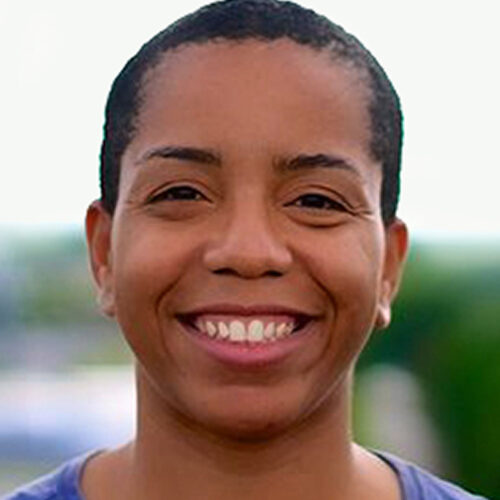
Dr. Thema Monroe-White
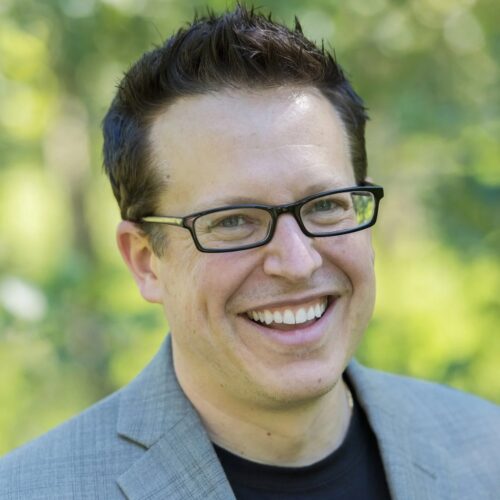
Dr. Ronald Beghetto
Professor, School of Nursing, John Hopkins University
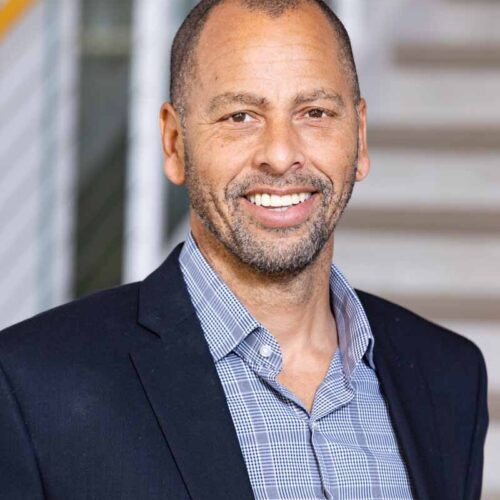
Dr. Robert Atkins
Robert (Bob) Atkins is the Anna D. Wolf Endowed Professor and Executive Vice Dean of the Johns Hopkins School of Nursing. He has spent most of his career working to improve the health and well-being of marginalized children and families living in distressed neighborhoods. Early in his career, he worked as a school nurse at East Camden (NJ) Middle School and cofounded the Camden STARR Program, a nonprofit development program dedicated to improving the life chances of young people in Camden. His work there motivated him to complete a PhD in the Department of Public Health at Temple University to better understand the factors that influence the health of children living in distressed environments. He also earned a bachelor of arts degree in political science and American civilizations from Brown University and bachelor of science in nursing from the University of Pennsylvania
Dr. Atkins has also served as national program director of the Robert Wood Johnson Foundation’s New Jersey Health Initiatives (NJHI) program. In this role, he created meaningful partnerships between stakeholders from higher education, philanthropy, local and state governments, and communities.
Professor of Developmental Psychology, New York University
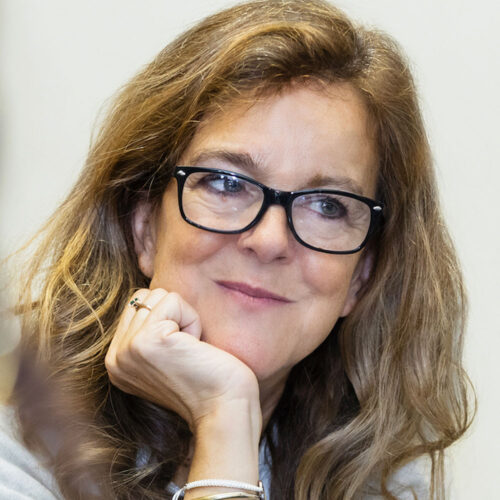
Dr. Niobe Way
Dr. Niobe Way is Professor of Developmental Psychology at New York University. She is the founder of the Project for the Advancement of Our Common Humanity (PACH; pach.org), co-founder of agapi and a youth tech center, Principal Investigator (PI) on the Listening with Curiosity Project, and head of the Science of Human Connection Lab (https://niobewaylab.squarespace.com). She is also the PI on a 20-year longitudinal study of 1,200 Chinese families. Dr. Way previously served as President of the Society for Research on Adolescence. She earned her B.A. from U.C. Berkeley, her doctoral degree in Human Development and Psychology from Harvard, and completed an NIMH postdoctoral fellowship at Yale in the psychology department. She has served on the Aspen Digital group on humanizing AI, consulted for TikTok, and currently serves as a senior fellow for the Carnegie Foundation.
Her mixed-method and longitudinal research examines the social and emotional development of children and adolescents and explores how macro ideologies shape families and child development in the U.S. and China. Dr. Way and her team created the Listening with Curiosity Project (LCP) to address the crisis of connection in schools by teaching the skills of relational intelligence necessary for human connection. The LCP has been integrated into classrooms across New York City and has been empirically shown to foster social and emotional skills, well-being, and a sense of common humanity. She also developed the NYU core course The Science of Human Connection.
Dr. Way is the author of Rebels with a Cause: Reimagining Boys, Ourselves, and Our Culture (niobeway.com), and the co-editor of The Crisis of Connection: Its Roots, Consequences, and Solution (NYU Press). She has authored or co-authored over a hundred journal articles and seven books, including Deep Secrets: Boys’ Friendships and the Crisis of Connection (Harvard University Press), which inspired Close, a film nominated for an Oscar for Best Foreign Film and winner of the Grand Prix Award. Her research with boys and young men has influenced changes to the guidelines for Division 51 of the American Psychological Association. Her forthcoming book, Our Social Nature in an Anti-Social Culture: A Five Part Story (Harvard University Press), continues her exploration of human connection.
Her research has been widely cited in mainstream media, and she has been profiled in The New Yorker and The New York Times, NPR, TEDMED, The Daily Show podcast, and ABC News.
Founder, Center for Whole-Child Education
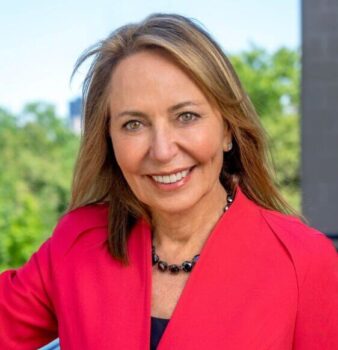
Dr. Pamela Cantor
Pamela Cantor, M.D., is a child and adolescent psychiatrist and the Co-Founder and CEO of The Human Potential L.A.B., whose mission is to leverage scientific knowledge and technologies to transform what people understand and institutions do to unlock human potential in each and every individual. She is currently writing a book about how everything we need to unlock our hidden potential is right inside and in front of us: in our biology and the people we trust. Dr. Cantor is an author of Whole-Child Development, Learning and Thriving: A Dynamic Systems Approach (Cambridge University Press) and The Science of Learning and Development (Routledge).
She founded the nonprofit organization Turnaround for Children (now the Center for Whole-Child Education at Arizona State University), is a Governing Partner of the Science of Learning and Development Alliance, and a strategic science advisor to the Carnegie Foundation for the Advancement of Teaching, AASA, The School Superintendents Association, and Learning Heroes.
Dr. Cantor received an M.D. from Cornell University, a B.A. from Sarah Lawrence College, served as an Assistant Clinical Professor of Child Psychiatry at Yale School of Medicine, and was a Visiting Scholar at the Harvard Graduate School of Education.
Professor, Human Development, Social Policy, Psychology, Northwestern University
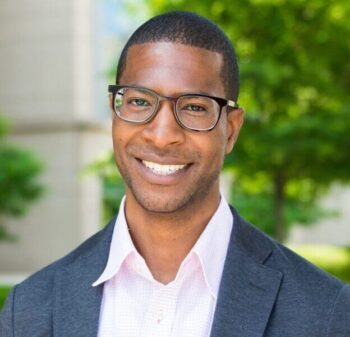
Dr. Mesmin Destin
Mesmin Destin is a Professor at Northwestern University, where he holds a joint appointment in the School of Education and Social Policy and the Department of Psychology. He directs a multidisciplinary lab group and investigates social psychological mechanisms underlying socioeconomic disparities in educational outcomes during adolescence and young adulthood.
Using laboratory and field experiments, Destin studies factors that influence how young people perceive themselves and pursue their futures. At the university level, Destin examines how social experiences and institutional structures shape the motivation, well-being, and educational trajectories of lower socioeconomic status and first-generation college students.
Dr. Destin received a B.A. from Northwestern University, and Ph.D. in Social Psychology from the University of Michigan.
Chief Research and Development Officer and Co-Founder, The Center for Expanding Leadership & Opportunity
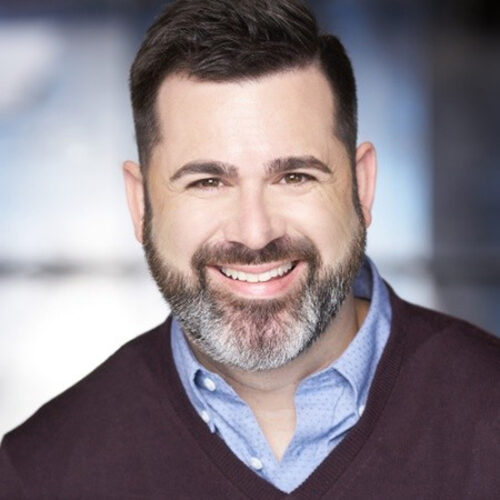
Dr. John Dugan
Dr. John P. Dugan (he/him/his) is a Senior Fellow at the Carnegie Foundation for the Advancement of Teaching and Learning and a nationally recognized scholar-practitioner focused on leadership education, equity, evaluation, and human development.
Dr. Dugan serves as Chief Research and Development Officer and Co-Founder of the Center for Expanding Leadership & Opportunity (CELO), where he leads large-scale research and design initiatives that strengthen educational pathways, advance civic and leadership capacities, and improve institutional practice across secondary and postsecondary education. His work has informed educational practice, policy conversations, and leadership development initiatives across K–12, higher education, and nonprofit sectors.
Previously, Dr. Dugan served as Executive Director of Youth Leadership Research & Impact at the Aspen Institute, where he led a national portfolio of initiatives focused on values-based leadership, educational and workforce pathways, and community investment through cross-sector collaboration. During his tenure, the portfolio expanded its reach and sustainability, maintained full operations throughout the COVID-19 pandemic, and mobilized significant philanthropic and earned-revenue investments to support long-term impact.
Dr. Dugan co-founded the Multi-Institutional Study of Leadership (MSL) and serves as its principal investigator. Since its launch in 2005, MSL has partnered with hundreds of institutions to generate actionable evidence that informs teaching, learning, and program design while contributing to the broader scholarship on leadership education.
A former full professor in the Higher Education graduate program at Loyola University Chicago, Dr. Dugan has authored more than 70 scholarly publications, including books, peer-reviewed journal articles, and book chapters. His scholarship is widely cited for its contributions to leadership theory, student development, and educational equity. His most recent book, The Handbook of Leadership Education & Impact, reflects his commitment to bridging theory, practice, and social responsibility.
Dr. Dugan earned his bachelor’s degree from John Carroll University and holds master’s and doctoral degrees in Counseling and Personnel Services from the University of Maryland, College Park.
Associate Professor of Artificial Intelligence and Policy, Schar School of Policy and Government and the Department of Computer Science at George Mason University
Dr. Thema Monroe-White
Thema (Tay-mah) Monroe-White is an Associate Professor of Artificial Intelligence and Policy in the Schar School of Policy and Government and the Department of Computer Science at George Mason University. She is particularly concerned with understanding the pathways to achieving social and economic empowerment for minoritized groups via AI education, and emancipatory data science, a liberatory approach to computational and quantitative inquiry that challenges algorithmic biases, advances racial equity, and reimagines how data and AI can serve marginalized communities.
She investigates the intersections of bias mitigation, critical computational methods, and racial equity across science and technology education. Dr. Monroe-White has received multiple grants to study equity in K-20 learning ecosystems for the purpose of designing inclusive, data-driven pedagogies that broaden participation in AI and data science. She is an advisory board member and fellow of the Institute in Critical Quantitative and Mixed Methodologies (ICQCM), has served on the Bureau of Labor Statistics (BLS) Technical Advisory Committee, and contributes regularly to national dialogues on equitable and emancipatory AI education through forums at the White House, the National Academies, and other convenings.
Thema holds a PhD in Science, Technology, and Innovation Policy from the Georgia Institute of Technology, and Master’s and Bachelor’s degrees from Howard University.
CITATIONS
Shieh, E., Vassel, F. M., Sugimoto, C. R., & Monroe-White, T. (2026). Intersectional biases in narratives produced by open-ended prompting of generative language models. Nature Communications. https://doi.org/10.1038/s41467-025-68004-9
Monroe-White, T., Boykin, C. M., & Daniels, J. (2025, March). Dismantling the logics of eugenics via emancipatory data science education. In IASE Conference Proceedings Series.
Vassel, F. M., Shieh, E., Sugimoto, C. R., & Monroe-White, T. (2024, May). The psychosocial impacts of generative AI harms. In Proceedings of the AAAI Symposium Series (Vol. 3, No. 1, pp. 440-447).
Monroe-White, T., & Lecy, J. (2023). The Wells-Du Bois Protocol for machine learning bias: building critical quantitative foundations for third sector scholarship. VOLUNTAS: International Journal of Voluntary and Nonprofit Organizations, 34(1), 170-184.
Monroe-White, T., Marshall, B., & Contreras-Palacios, H. (2021, September). Waking up to Marginalization: Public Value Failures in Artificial Intelligence and Data Science. In Artificial Intelligence Diversity, Belonging, Equity, and Inclusion (pp. 7-21). PMLR.
Monroe-White, T. (2021, June). Emancipatory data science: a liberatory framework for mitigating data harms and fostering social transformation. In Proceedings of the 2021 Computers and People Research Conference (pp. 23-30).
Professor, Mary Lou Fulton College for Teaching and Learning Innovation, Arizona State University
Dr. Ronald Beghetto
Ronald A. Beghetto is an internationally recognized expert in the psychology of human creativity, GenAI, and the possible within educational settings. He serves as Professor at Arizona State University’s Mary Lou Fulton College for Teaching and Learning Innovation, where he holds the Pinnacle West Presidential Chair and founded and leads the AI-Possibility Lab.
Prior to Arizona State University, Dr. Beghetto served as Professor of Educational Psychology, Director of UConn’s Innovation House, and Graduate Program Coordinator in the Cognition, Instruction, Learning & Technology Program at the University of Connecticut. He also served as Associate Dean for Academic Affairs and Associate Professor of Education Studies at the University of Oregon.
Dr. Beghetto’s work explores what becomes possible when creativity is treated as something every learner can develop. He studies the creative and responsible use of generative AI as a partner in possibility thinking, the democratization of creative educational experiences, and the growth of creative agency in and beyond the classroom — all in service of preparing young people to make a positive impact in the world.
Dr. Beghetto earned his Ph.D. in Educational Psychology from Indiana University, specializing in Learning, Cognition, and Instruction.

Sign up for the Carnegie newsletter
Get the latest on our work to transform education, delivered straight to your inbox. Follow the ideas, research, and stories moving us toward a world where every student’s potential is realized.


