


Stay informed
Explore our press releases and curated features and stories to stay up-to-date on our most recent announcements, breakthroughs, and achievements.
If you’re interested in covering our work, don’t hesitate to get in touch with Kito Cetrulo, Vice President of Communications and Engagement. Email: kcetrulo@carnegiefoundation.org
Featured

Media,
Why Opportunity Colleges and Universities Matter
A new designation within the Carnegie Classifications — long viewed as the nation’s gold standard for organizing the postsecondary sector …

Media
Teachers Like It. Research Is Promising. Is This the Solution to Teacher PD?
Decades of research suggest engaging, effective teachers are the most important factor in student learning. But linking ongoing teacher learning to student …

Media
Carnegie Recognizes Colleges for Community Engagement
The Carnegie Foundation announced on Monday that more than 230 colleges and universities received its Community Engagement classification. The designation …

Media
Colleges serving a different kind of student matter
For decades, old-school rankings and classic classifications have helped define what excellence looks like in higher education. However, in doing …
Latest

Media
Timothy Knowles
Silicon Valley’s 2026 Power List
From nonprofit founders to CEOs to volunteers, Silicon Valley benefits from the generosity of thousands of big hearts and minds. …
Media
Future of High School Network
2 Henrico high schools redesign ninth-grade experience through partnership with Carnegie Foundation
Through a partnership with the Carnegie Foundation for the Advancement of Teaching, two Henrico County high schools launched a pilot …

Media
WILX: Educators gather in Lansing for future of learning summit
More than 200 educators from across Michigan gathered Wednesday at the Michigan Virtual and Future of Learning Annual Summit. The …

Media
Skills
EdWeek Market Brief: Do Students Really Have Critical Thinking Skills? Inside the Market’s Race to Assess the ‘Unquantifiable’
Imagine a high schooler receiving a score that tells them whether they’ve grown in their creativity. Or taking a test …
Media
Santa Fe College’s student success story highlighted by Carnegie Classifications
The Carnegie Classifications of Institutions of Higher Education explores Santa Fe College’s “culture of care” in a national article about …
Media,
Carnegie Classifications, Featured, Highlight on Homepage, OCU
Why Opportunity Colleges and Universities Matter
A new designation within the Carnegie Classifications — long viewed as the nation’s gold standard for organizing the postsecondary sector …
Media
Carnegie Classifications, Higher Education, OCU
Yale asked the right question. Now the rest of higher education owes an answer
Earlier this month, Yale published the findings of a year-long faculty investigation into why Americans have lost faith in higher …
Media
ETS, Skills for the Future
Creating Communicators and Critical Thinkers: Soon There Will Be A Test For That
Educators at the Making Waves Academy knew they wanted to teach high school students to be good communicators, problem solvers …
Media
Featured
Teachers Like It. Research Is Promising. Is This the Solution to Teacher PD?
Decades of research suggest engaging, effective teachers are the most important factor in student learning. But linking ongoing teacher learning to student …
Media, Video
Carnegie Classifications
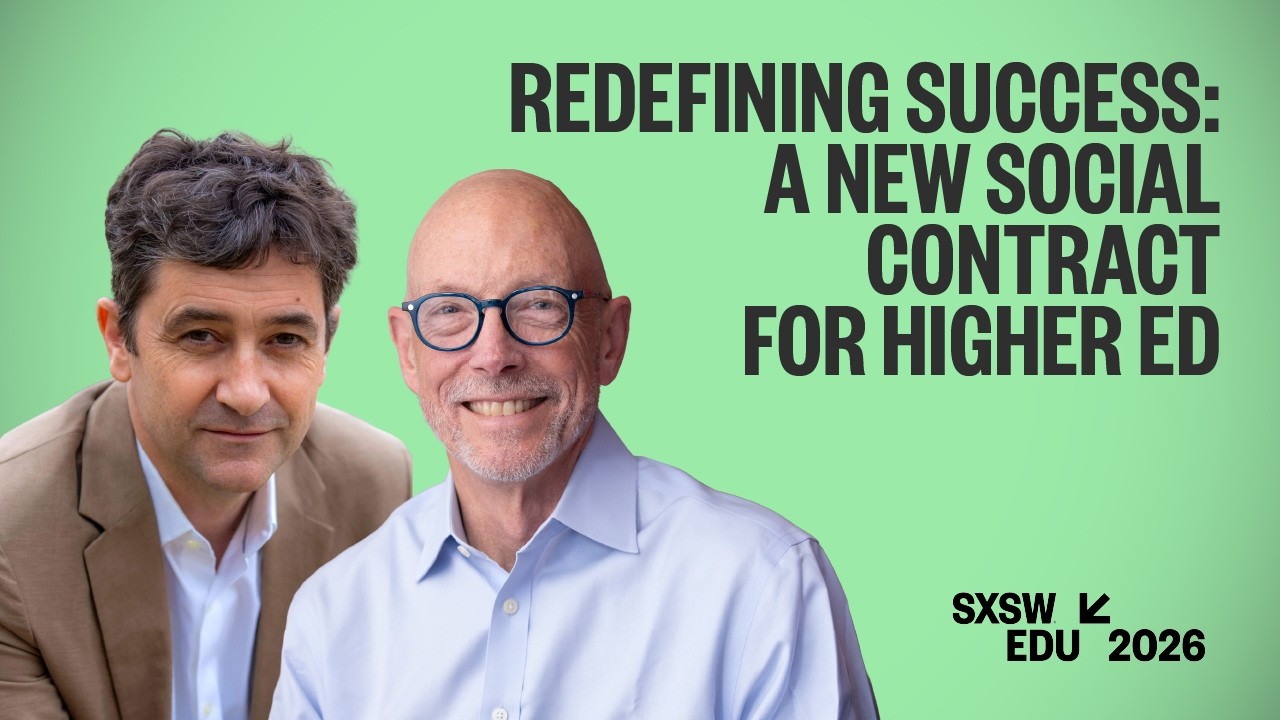
Redefining Success: A New Social Contract for Higher Ed | SXSW EDU 2026
At SXSW EDU 2026, Timothy Knowles, president of the Carnegie Foundation for the Advancement of Teaching, joined Ted Mitchell, president …


