


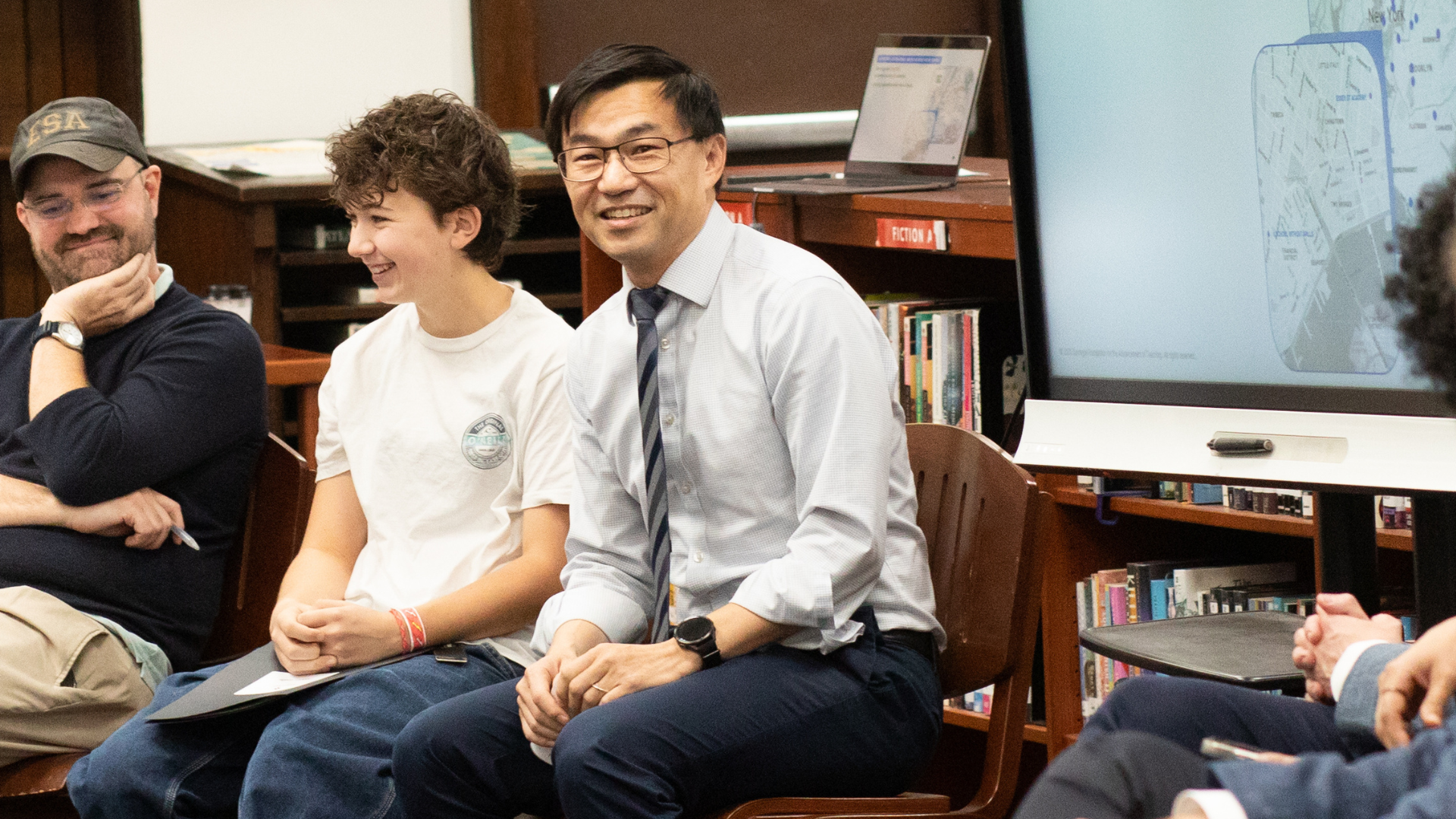
Explore this Q&A with Dr. Alan Cheng, the new Supervising Superintendent for High Schools at New York City Public Schools. In this conversation, he explains how, as Superintendent, his team advanced deeper learning for students across 51 high schools in all five boroughs.
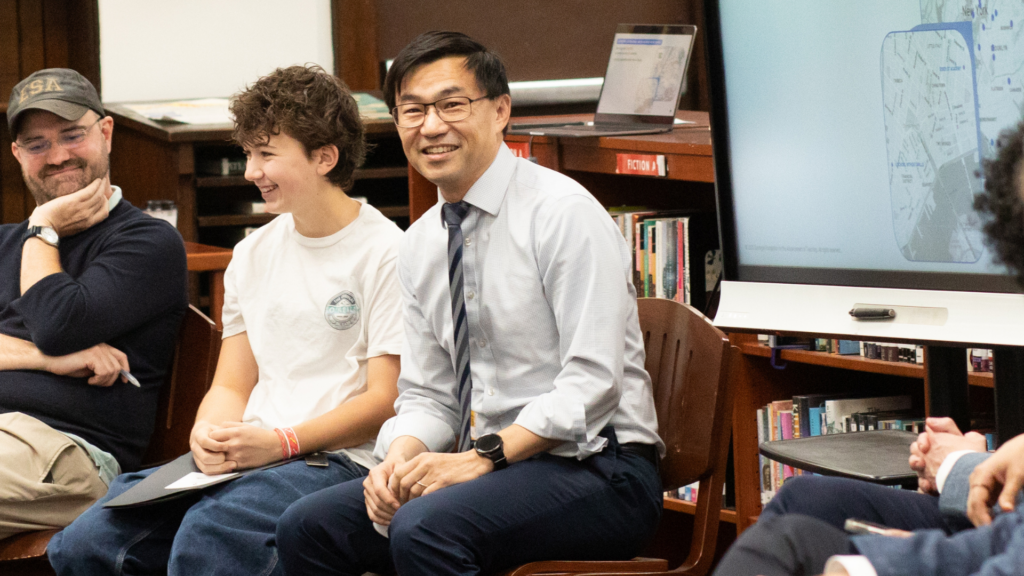
With nearly two decades of experience in New York City Public Schools, as a teacher, principal, deputy superintendent, and superintendent, Dr. Cheng has centered his leadership on strengthening instructional quality and expanding postsecondary pathways aligned with evolving graduation expectations, college, careers, and engaged civic life. In this Q&A, Dr. Cheng reflects on the opportunity to design high school learning environments that are rigorous, engaging and genuinely prepare students for success after graduation. He discusses how his district is building a culture of belonging, embedding project-based learning, participating in national conversations about the high school transcript, and aligning K–12 with higher education and workforce demands.
As part of the Future of High School Network, an effort uniting 24 systems across the country to build the evidence and implementation needed for a new architecture for high school, Dr. Cheng and his team help demonstrate what is possible when competency-based learning becomes embedded within large, diverse public systems.
What current conditions and demonstrations of demand lead you to believe that the moment for high school transformation is now?
I’ve spent my entire career in New York City Public Schools, and I’ve never been more hopeful than I am now. As a first-generation immigrant who arrived in this country not speaking English and not always feeling a sense of belonging, I’ve long felt compelled to ask: What can we do to ensure that young people don’t have that same experience in our schools?
The world is changing quickly. When we talk to employers—from Mount Sinai Hospital to Chase, JetBlue, and faculty at CUNY and SUNY—we hear a consistent message. Yes, students need strong content knowledge and literacy skills. But the premium today is on human skills: the ability to adapt, collaborate, communicate clearly, and work effectively with others.
These are the same skills named in New York State’s Portrait of a Graduate. That framework provides clarity about what we should be working toward and ensures those competencies are not treated as “extras.” We have to design learning environments where those human skills are intentionally cultivated and assessed.
The future is already alive in many of our classrooms. The opportunity now is to continue aligning our broader ecosystem around what many classrooms are already demonstrating.
What is unique about your district within New York City Public Schools?
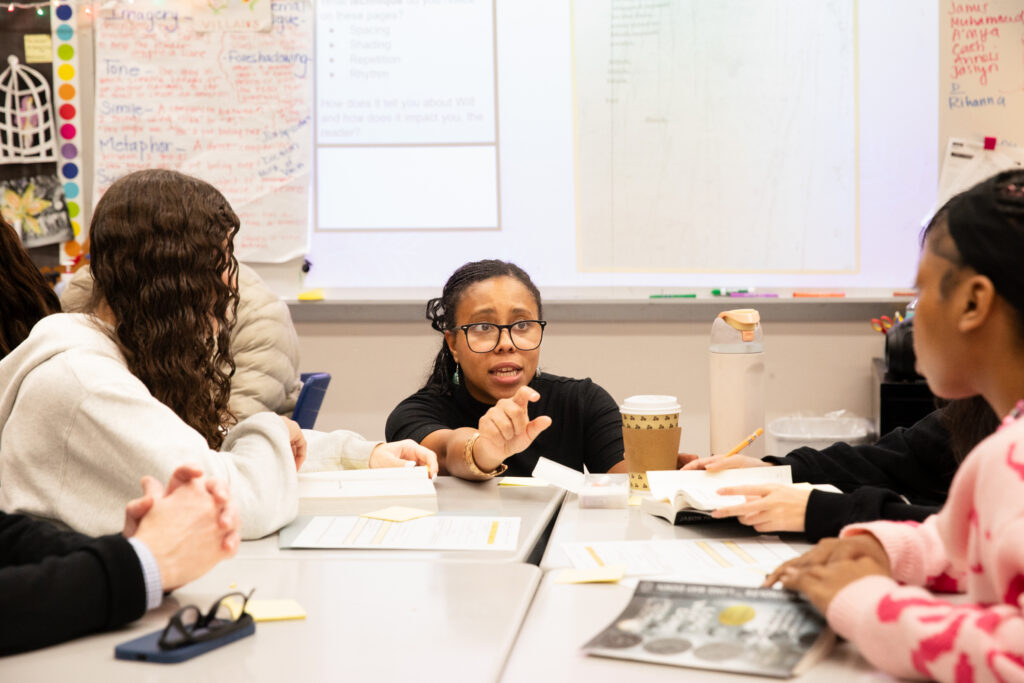
Just last week, I was in a high school science classroom in Queens. A group of students was preparing scientific experiments, sorting note cards in English, Spanish, and Bengali. An eleventh grader who had recently arrived in the country presented her research to a panel of community experts. She pulled up water quality results from samples she collected near an old landfill and walked the panel through her analysis. She listened carefully to their questions, paused, reconsidered her reasoning, revised her hypothesis in real time, and tried again.
What struck me most was that this wasn’t unusual. We see this level of engagement across our schools.
Our district includes 51 high schools and more than 22,000 students. Every week, students participate in apprenticeships, learn outside the classroom, and complete portfolios to demonstrate mastery. They engage deeply with ideas and articulate their thinking publicly.
We see students interviewing neighbors about housing policy. We see multilingual learners building arguments across multiple languages. Many students learn Spanish because it has become the lingua franca in our schools—even if it’s not their home language. And all of this is happening within New York City Public Schools.
How did this become the norm for students in your district?
Our district is a network of mission-aligned schools. This didn’t happen by accident.
For years, this kind of learning existed in small, boutique settings. About twelve years ago, a group of school leaders came together to ensure this wouldn’t be a “this too shall pass” moment. Six strong networks aligned around a shared vision for deeper learning.
Over the past seven years, I’ve been a part of this work. We’ve begun documenting and codifying the core practices that are now consistent across our schools. A few key components:
- Build belonging. In some schools, eleventh graders take a course on the history of U.S. education and then critique their own school’s curriculum. They propose new courses, research and design syllabi, vote on which classes should be offered, recruit a teacher, and then serve as teaching assistants the following year. The result is often the most relevant and popular courses in the building. More importantly, students see themselves not as passengers, but as architects of their educational journeys.
- Learn through projects. Students need context and relevance. In our civics and U.S. government courses, learning is grounded in youth-led community research. For example, students studying water quality at the Gowanus Canal gather and analyze data, invite community members to discuss implications, and present recommendations to city council members. These public demonstrations of learning are central to how students build confidence and key communication skills.
- Reimagine the transcript. We’re participating in national conversations exploring how learner records might better articulate skills and competencies. , These transcripts could offer a far more compelling picture of what students know and can do.
How are you thinking about teacher preparation and measuring student success in your district?
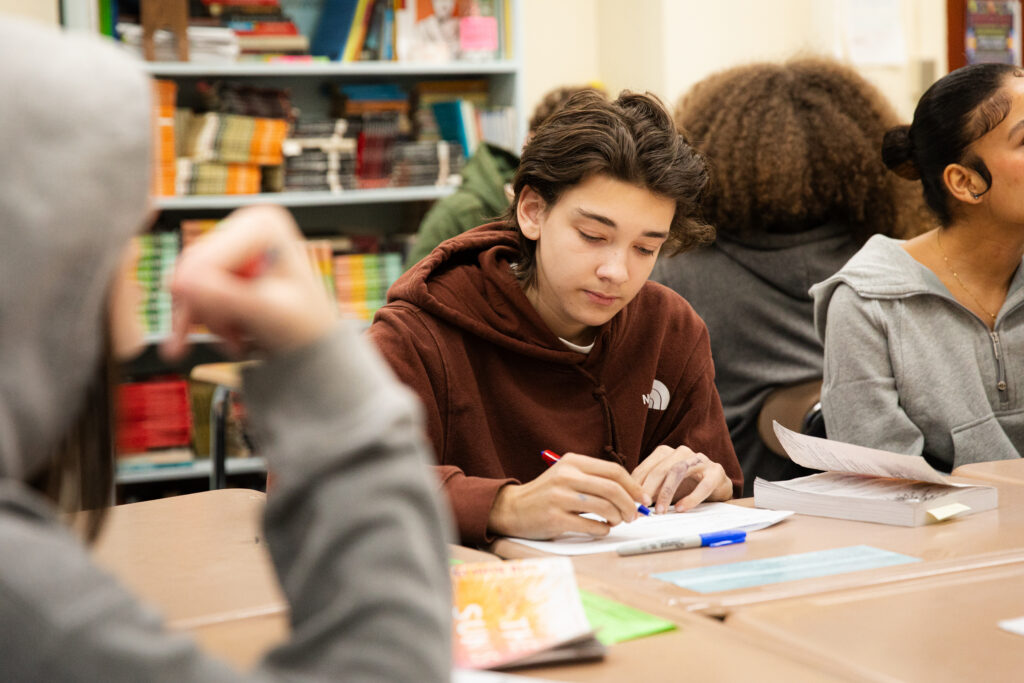
We’re working closely with higher education partners to design teacher prep pathways. For example, I recently spoke with President Frank Wu at Queens College about strengthening multilingual residency pathways. We’ve also partnered with Brooklyn College to design a principal licensure and district leadership program tailored to our schools. Our principals and district leaders serve as adjunct faculty, and residents train directly within our schools. We are co-creating preparation programs aligned with the kind of learning we want to see.
At the same time, we need to shine a spotlight on this work and study it rigorously.
Michelle Fine at CUNY conducted longitudinal research comparing graduates of consortium schools (like those in my district)—many of whom did not focus on SAT preparation because their schools emphasized projects and performance assessments—with similar peers. She tracked outcomes over multiple years and found that consortium graduates earned higher GPAs in their first semester of college, had higher pass rates, greater participation in office hours, stronger persistence at 18 months, and higher levels of engagement. Even when college systems weren’t fully designed for them, these students thrived because of the analysis, communication, and critical thinking skills they developed in high school.
How are you thinking about workforce preparation in the age of AI?
A critical starting point is recognizing schools as one of the last local civic squares—places where young people from different backgrounds come together to learn with and from one another. That social and cultural dimension of schooling will only become more important in an AI-driven world.
At the same time, we’re actively engaging with AI. Through a design fellows program, we meet every two weeks with teachers, paraprofessionals, and parent coordinators who are building AI tools tailored to their classrooms and communities. We’re also working with entire schools to rethink instruction in light of what AI now makes possible. Next, we’re asking: What could students do with these tools? This work aligns with broader NYC Public Schools guidance around responsible AI use and instructional innovation.
What are the challenges and barriers that stand in the way of redesigning the American high school?
First, I want to name that the barriers are not students. It’s often the structures wrapped around them.
Many of our structures were designed for a different era, and we’re learning how to adapt them to today’s realities. High schools, colleges, and employers still send different signals about what matters. Too many people believe deeper learning only works in selective settings, even though we see it thriving in large, diverse public schools, like those in my district. The practical constraints are real: old assessment systems, staffing models, and accountability rules that reward coverage instead of understanding. This isn’t about blame. It’s the design we inherited.
What we need now is connective tissue—clearer signals, better assessments, learner records that show what students can actually do, and space for districts to learn and iterate. More and more, our students graduate with the skills colleges say they value. We need stronger alignment across admissions, placement, and credentialing so authentic evidence of thinking carries weight.
New York is uniquely positioned because K–12, CUNY, SUNY, and our cultural institutions operate within the same ecosystem. Deeper learning in high school works best when higher education reinforces it. And when that alignment happens, colleges benefit: students arrive more confident, prepared, and ready to persist.
What advice would you give to other district leaders, policymakers, and partners across the country to advance education transformation at scale?
First, continue investing in the infrastructure that allows strong models to scale responsibly. Models matter, but the levers that move systems are shared assessments, learner records, common language, and clearer signals from higher education. Second, support districts as research and development engines, rather than just implementers. Third, shape the public narrative so people understand that deeper learning is happening in large public systems and not just niche environments. Fourth, bring higher education into the redesign process early.
And finally, stay close to practitioners. The expertise we need already exists in classrooms serving multilingual learners, newcomers, and students with a wide range of needs. We simply need to tap into that collective wisdom to build the education system our young people deserve.


