

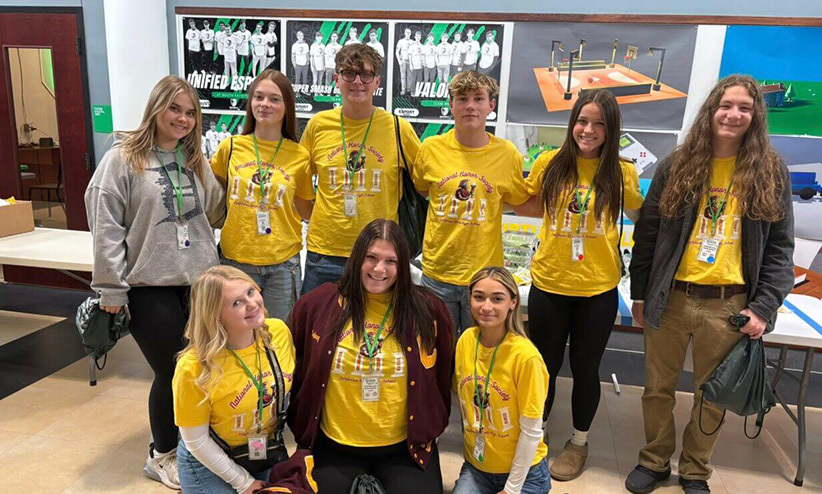
Explore this insightful Q&A with Gregg Behr, Executive Director of the Grable Foundation, and Laura Jacob, Superintendent of California Area School District in rural western Pennsylvania, as they discuss their approach to innovation and how they are building lasting momentum for change in their region. Behr and Jacob discuss the impact of their partnership and the importance of high school in students’ learning journeys, while sharing a ‘little bets’ strategy, where thousands of small, developmentally appropriate innovations aggregate into ‘big moonshots’ over time.
Their collaborative success is epitomized by California Area School District’s engagement within the Future of High School Network, an effort of 24 systems across the country dedicated to driving the evidence and implementation needed for a new architecture for high school nationwide.
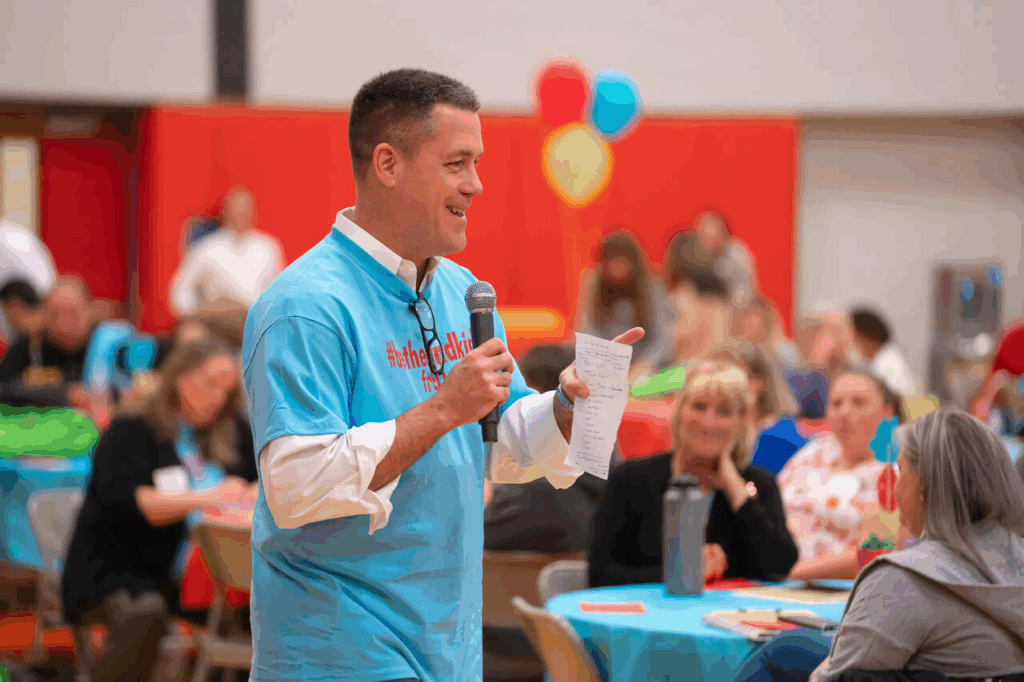

The Grable Foundation is a powerful force in Pittsburgh’s education landscape. Among its areas of focus—early learning, public schools, out-of-school time, and more—the foundation also invests in high school transformation. Why high school, and why now?
Gregg Behr: Next year marks the 50th year for the Grable Foundation, and from the very beginning, supporting public schools has been a core focus. The school districts in western Pennsylvania have positioned themselves at the forefront of education innovation. Right now, we’re supporting a cohort called Future-Driven Schools, a regional alliance of nearly 50 public school districts working together—and with AASA, the School Superintendents Association—to prepare every learner for tomorrow. We have 19 school districts that are part of Digital Promise’s League of Innovative Schools. By nearly any measure, the nation’s largest cluster of innovative school districts is right here in western Pennsylvania. And the California Area School District—a member of this amazing Future of High School Network—is a great example of what that innovation looks like.
Something important about our region, and about our investment in public high schools, is the willingness of school boards and district leaders, like California Area’s Laura Jacob, to step forward. Of course, they are addressing the poverty, polarization, and everything else that’s in front of them. But these leaders are also recognizing what kids want, need, and deserve. High school is, in the end, the most critical part of that learning journey.
So, why now? We have leadership that’s willing to take risks in developmentally appropriate ways, rethinking the entirety of the pre-K to 12 learning journey for kids, teachers, parents, families, and caregivers alike. The hardest nut to crack in all of that is high school and the bell schedule.
How is California Area School District collaborating with the Grable Foundation? What are the key goals and the impact thus far?
Laura Jacob: The Grable Foundation is truly our nation’s and our area’s cheerleaders, as public school superintendents. They’re, without a doubt, this ongoing force in the Pittsburgh area that is championing, encouraging, and helping education leaders facilitate the change that we want to see happen. They’re also working tremendously hard to bring together individuals who want to see improvements in our schools to learn from one another, to identify different strategies school systems are utilizing to spur our professional learning together. Those conversations with tremendous leaders only continue to raise the bar. Grable has been relentless in communicating the positivity of public education, and highlighting the good work that is happening, and truly the organization has our back as public school leaders.
For example, with the Moonshot Grant from Grable, I’ve never had a grant opportunity where the grant specifically says, “we want you to make bold, challenging, risky moves, even if it means failure.” Right now, we know that when it comes to changing high school, we have to change the systematic structures that we have in place. Our current Moonshot grant is trying to redesign the transcript. We’re calling it the village transcript, as it takes a village to raise a child, and all stakeholders should contribute to identifying the skills, dispositions, and abilities of children. No longer is the transcript simply sharing high school grades, which don’t give us a good picture of the true child, but now, we’re developing a system and a structure so that we can highlight all the skills, knowledge, and experiences our community wants for our children. We’re using the skills that have been identified in Carnegie and ETS’s Skills for the Future work. For example, if a student works at the local volunteer fire department, that work would not show up on a typical high school transcript. In other words, they would be an average student, and their passion for the fire department, and the skills and certifications they’ve gained wouldn’t be traditionally recognized in a high school transcript. Now, that’s going to change with the village transcript because it’s going to provide a broader picture of what the child brings to the next step in life after high school. If it wasn’t for Grable pushing our thinking and providing a support structure with the Moonshot Grant, we likely wouldn’t be willing to take the risk of transforming the transcript.
What lessons do you think your collaboration offers about the crucial importance of local partnership and investment in driving and sustaining educational innovation? Who else needs to be at the table to appreciate the risks of innovation and to sustain and scale transformation?
Gregg: The blessing and the curse of philanthropy is that you’re always in the stratosphere. You’re always at 30,000 feet. The blessing side of that position is that we can see what’s going on, who’s doing what, and how they’re doing it. We have the privilege at Grable to support the broader learning landscape, including what happens in school, but also in early learning, out-of-school time, and mentoring. So, we invest in a range of field-building organizations year in, year out—the organizations convening and supporting early learning professionals, arts educators, out-of-school-time programs, elected officials, and beyond.
We also support Remake Learning, a nearly 20-year-old dynamic network of 800 schools, museums, libraries, campuses of higher education, creative industries, and more. What we’ve tried to do is make it incredibly normal for funders, out-of-school time directors, school superintendents, high school teachers, early learning teachers, and librarians to be in common professional development and learning programs. We’re trying to make it normal that the human beings who care about kids find a reason to get together, to wonder together, to try new things, and to ask that ever-hopeful question: “How might we?”
At its best, philanthropy is the R&D of civil society. Philanthropy can help give freedom and permission to leaders like Laura in schools—but also in museums and libraries and out-of-school spaces—to try new things. Sometimes, those efforts fail, though always in developmentally appropriate ways. Sometimes, they lead to something amazing—something that supports learners in ways no one would have been able to achieve on their own. Again, this work is about making it normal for folks like Laura and other innovators to find cause to work together, so that it’s not weird that Laura’s working with Carnegie Mellon University, or the Andy Warhol Museum, or the local workforce investment board. It’s the norm. And it’s supported by a lot of communications, too.
Laura: If it weren’t for the Grable Foundation, I wouldn’t necessarily be in contact with many of the school leaders or organizations I am now, because I’m located about 45 to 50 minutes south of Pittsburgh in a rural, small school district. Traditionally, I would not have the opportunities to interact and engage with the superintendents or museums, for example, in the Pittsburgh area. California Area School District is now connecting regularly on Zoom with a non-profit, after-school program in Pittsburgh, learning from one another because of Grable. Their ability to bring us all together has been tremendous in sustaining focus and patience.
We sometimes like to think that innovation happens immediately overnight, but it takes time. I believe in constant 1% improvement change day in and day out. It’s so important to highlight regularly where we’re seeing change happen, and how we can go even further. Innovation also requires sustained focus on constant improvement to push things further, despite challenges. The more you see change, and hear from supportive partners that you are doing innovative things, the more you believe it yourself and feel motivated to continue pushing. Sustainability, as well as focus, has really empowered us as a team.
Gregg: We talk a lot about little bets and big moonshots. To be sure, it’s part of our vernacular, and it’s an actual part of our grant-making strategy here in the Pittsburgh region via Remake Learning. We fully believe that genuine, sticky change happens in the aggregations of thousands and thousands of little bets. We can speak to the systemic changes that Laura’s taking on, but it’s little bets that add up to those changes: putting solar scooters on campus to get kids from one building to the next. Building a yurt to support outdoor learning. Bringing baby lambs in to support struggling readers in a way that they feel more comfortable, particularly in a rural setting where baby animals are familiar to kids. Using bees and beekeeping, another familiar phenomenon, to teach math. It’s the compilation of lots and lots of little things, none of which was a moonshot, and all of which was unexpected. It’s the compilation of that and many dozens of other things that position a school district—or an educational service agency, or a state—to think in a big way at a game-changing moment.

As I mentioned, we work with 47 districts involved in what we locally call Future-Driven Schools, a partnership with AASA. Next month, we are organizing a workshop around high school reform, and after that workshop, we’re going to make available to all 47 school districts grants of $1,000 each to make little bets of their own. In aggregate, it’s $47,000, which is not a huge amount of money. But we all know that schools can do incredible things with $1,000. Really, it’s just that little bit of permission, that opportunity, for someone in the district to do something tangible and passion-driven, to push something meaningful a little bit further. Then, they’ll have the opportunity to showcase the learning that happens across the network. This is an example of that little bet mentality that positions and drives us to take those moonshots.
What gives you hope and confidence that there is a positive momentum for transforming high schools across Pittsburgh because of what you’re witnessing and driving in your grantmaking?
Gregg: I have a list of five things that give me hope and confidence about the momentum for transforming high school:
- Systems making use of learning science. Over the past decade, we’ve seen simple changes—like getting rid of the bell schedule—made ordinary to respond to how teenagers are best supported in their well-being, which is foundational to any learning that might happen.
- Strong professional development and learning. When we look at our intermediate units in Pennsylvania—our educational service agencies—as well as significant nonprofit providers of PD, it has been made normal that museum directors, early childhood educators, high school teachers, and others are just in that same space together, whether they’re wrestling with STEM-infused curricula, or maker-centered learning, or career pathways. Ten, fifteen years ago, this would have been shocking.
- Proliferation of networks. For decades, Grable and other funders have supported the Forum of Western Pennsylvania Superintendents, the Assistant Superintendents Forum, and the Principals Academy. There are so many leadership and teacher-led networks, like Project Zero Pittsburgh and others, where school leaders are finding reasons to connect, driving their own learning, cooperation, partnership, and building relationships, which is the essential glue for anything spreading beyond a singular building or district or entity.
- Project-based learning momentum. We’ve supported the creation of a Pittsburgh version, across multiple districts, of World of Work, borrowing from work in San Diego, where districts have introduced aviation programming or drone technology. School leaders are now wrestling with AI, but doing so together—writing policies together, thinking about coursework together, forging partnerships together with technology companies in Pittsburgh or with Carnegie Mellon University. It’s a lot of cross-district, serious, hands-on, project-based learning, and introducing curricula in new ways in their schools.
- Parent, family, and caregiver engagement. Too often, we leave them out. We have more than thirty-five school districts in this region that have been part of Parents as Allies for the last five years. After establishing research with Brookings and HundrED a few years ago, parent-led teams were established across Western Pennsylvania. These teams have since launched over 200 “little bets” to move engagement beyond basic communication, fostering a “village mentality” where families become active allies with schools, focused on the core purpose of learning and student development—a vital component for reimagining high school.
How has California Area School District worked with students, parents, and families to create a collaborative culture to support your high school transformation work?
Laura: This focus on community flips the framework to design experiences where it isn’t an us-versus-them experience, but it is truly a partnership to ensure that our kids are as successful as they possibly can be. We ask ourselves: “How can we design experiences so that all families feel welcome, not just certain families?” That was the first step in Parents as Allies: teaching us how to approach those experiences. The next step is making sure everyone is at the table, ensuring that we have diversity of perspectives and voices so that all feel welcome in our communities.
From a leadership perspective, we see this in a class we call “The Moonshot Class,” where there are no grades and no grade levels at all. If you make it optional, families can choose to be part of it. We started with just twenty kids being part of the Moonshot program. I’m a small school, but we’ve now grown to over one hundred students who have chosen to be part of the Moonshot program. Again, it’s a step-by-step progression and change that’s happening, but that also keeps it sustainable. If I were to just dictate change, it’s not going to stick. You won’t have people believe in it. They will just comply or not comply, and that would be the end of it. By making it optional and having families involved in the decision-making, it becomes a community decision. When people get to opt in to an opportunity, that’s their vote of belief in the work and it’s how we’ve been able to sustain the Moonshot program.

Gregg: If we look at Laura’s tenure, or the tenure of superintendents among the school districts involved in our local League of Innovative Schools members, or the Future-Driven Schools with AASA, their leadership tenure far outstrips the national average. Now, that might be partly a product of Western Pennsylvania being less nomadic than other places. My conjecture is, I genuinely believe the connections that school leaders feel make the work a whole lot less lonely. And, in a sense, I think the investment in infrastructure is buying us time with leaders who have more time to accomplish more things, because we all know what leaders at four years versus nine years versus at eleven years can accomplish.
How is the Grable team able to know how to support colleagues in your community?
Gregg: I’d like to think that we just have a culture of curiosity here. We try to go places together, so it’s never one singular person, but also making sure the whole team knows what’s happening. Really spending the time so that we’re reading, digesting, trying to make sense of things, and talking to one another. I always tell people to get out of the office. It’s just so important to be present. And honestly, we talk all the time about a customer service ethic, and we aspire at Grable to have a Ritz-Carlton, Disney-like customer service ethos, internal and external. And that external bit often means just being present and bearing witness, rather than pontificating and interrupting. I hope that’s true.
Laura: If I could interject from my perspective, the Grable Foundation is present with us, and we’re engaging together. So yes, they’re right beside me at, say, a conference or a professional development opportunity, but then also we’re having free discussions of “How do we make this happen in Pittsburgh?” or “How do we adjust or highlight certain things?” They’re physically there, but they’re also very much engaged with us together in those discussions.
Gregg: We are fundraisers as much as we are grantmakers. I would like to think that we’re a smart grantmaker, and we also know that others have funds, too. So, let’s be advocates and fundraisers as much as we are grantmakers. Because it’s not our money. Added together, it’s the community’s money.
What advice would you give local policymakers, funders, educators, and school leaders in cities across the country about building philanthropic partnerships to support high school transformation?
Gregg: I have four pieces of advice. The first is geared toward philanthropy because it’s best suited to fund intermediary and field-building organizations that attend to the quality of our learning landscape. They attend to professional development, they attend to marketing, they’re the ones who are bringing together leadership groups. That is unsexy funding. I suspect a lot of funders see it as boring, but it’s core, it’s critical, it’s foundational. Little else good can happen absent that core funding for attention to quality in the fields of interest, year in, year out.
This is related to the second piece of advice: patient support. It’s important not to get tired or start questioning which way the wind is blowing.
A third thing would be getting comfortable with catalytic grantmaking for discretionary purposes. I’m so lucky that I work on behalf of trustees who get and support that. And that, together with other funders—the Richard King Mellon Foundation, the Benedum Foundation, the Hillman Family Foundations—we’ve been able to pool funds together, for example, at Remake Learning. Then, Remake Learning itself has its own RFP process, its own panel review process, that allows for things like those Moonshot Grants. So, pooled funds provide community-based discretionary support for leaders.
The fourth is a deep investment in communications and broad support for the myriad ways we can help tell and invest in storytelling through videography, photography, social media, writers, and PR. Communication provides cover, encourages courage, and helps spread ideas.
Laura: It’s easy to point out challenges or the limitations of an idea, especially in our polarized society; however, as a leader, be sure to identify yourself with challenges that might exist in developing an idea, but champion giving it a try, and the what-ifs.
Both Grable and Carnegie have been amazing thought partners to talk through big ideas. School leaders will always be faced with naysayers, but if you take feedback seriously, you might not achieve your end goal at the very beginning, but you can take incremental steps that begin to snowball. At the same time, as leaders, we have to be close with those who keep lifting us up and help us push forward, because it’s the supporters that keep us motivated to continue to make the change we want to see happen.